The 48-hour migration playbook: what to move first, what to keep, and the exact apps that won't make you regret it on Monday.
No spam. Practical privacy, AI, backup and tool drops. Unsubscribe anytime.Short answer, for anyone landing here from the Njalla question: if pseudonymous hosting is the requirement, Njalla is the closest thing to it, because it is not a traditional host. It acts as a privacy shield and legally owns the domain or server in its own name, so your identity never shows up in a public registry. It comes out of the Pirate Bay founding team, and the operating company behind it is njalla.srl, registered in Costa Rica. If anonymity is not the requirement and you want GDPR grade compute at the best price, Hetzner is the workhorse of the European indie hosting world, with the caveat that Hetzner demands ID verification at signup. That single requirement is why the pseudonymous path runs through 1984 Hosting or FlokiNET instead.
The 2026 Sovereign Stack: Privacy Tools That Actually Resist Surveillance
Most privacy roundups are recycled. They list the same five VPNs, the same “use Signal” advice, and the same call to “use a password manager”, and they haven’t been re-verified since 2022. The marketing on vendor pages says one thing; the actual data flows say another. A sovereign stack isn’t a list of brand names. It’s a deliberate set of defaults where every tool’s claim of privacy has been checked against the actual code, the actual jurisdiction, and the actual business model, and where every choice flows from a real threat model, not from a brand name that sounds private.
What follows is the stack a serious sovereign builder actually runs in 2026. Not a privacytools.io mirror. Not a privacy maximalist fever dream. What’s actually shipped and verified live today, organized by what each layer of the stack is for and which tool in that layer I trust with the threat model underneath it.
Eight categories, top to bottom: Email, DNS, VPN, Hosting, Search, Comms, Money, AI. Each section ends with a mini-table you can scan to see what’s free, what’s KYC-free, and what jurisdiction you’re trusting. Then a flat list of the anti-patterns I’d avoid even if they’re popular. And finally, a “build the rest” section pointing to the other pieces of the stack.
If you’re building a sovereign stack for the first time, the order matters: DNS and VPN first (they’re the layer every other app rides on), then email and search (the daily-driver changes), then comms and money (the identity and value layers), then hosting and AI (the production surfaces). Don’t try to swap everything in a weekend. Pick one layer, live with it for a month, move to the next.
And one note before we start: no single tool is sovereign. Sovereignty is the discipline of choosing who gets to see what, on purpose, every time. The tools below are what make that discipline possible. The discipline itself is on you.
Email: The #1 Thing That Puts You on a Data Broker’s Map
Every account you own resets its password through your inbox. Your email is the master key to your entire digital life, and most people handed it to a company that reads every message to serve ads. Google’s entire business model is built on scanning Gmail content to build an advertising profile of you. If you do one thing this year, move your email to a provider that cannot read your messages and operates outside the Five Eyes intelligence-sharing network. The providers below all offer end-to-end encryption, require no phone number for signup, and are headquartered in jurisdictions with strong data-protection law.

Proton Mail
The Swiss standard-bearer. Zero-knowledge encryption, OpenPGP-based, with a clean pricing structure that starts free and tops out at €7.99/mo for the full suite (Mail + VPN + Drive + Pass). Switzerland is outside Five Eyes, and Proton’s legal posture is genuinely adversarial: their 2025 transparency report shows 9,301 legal orders received, 988 contested in court.
The catch: Proton Mail is not zero-knowledge on the Free tier by default. Content is encrypted in transit, but Proton holds the key for spam filtering unless you enable PGP-Wrapped encryption on paid plans. If you are on Free and treating it like a vault, upgrade or turn on PGP.
| Jurisdiction | KYC | Anonymous Payment | Audit |
|---|---|---|---|
| Switzerland | Email only | Card only | Securitum + annual transparency report |
Tuta (formerly Tutanota)
German-engineered, quantum-resistant encryption, and arguably the strictest zero-knowledge implementation of any mainstream provider. Tuta encrypts subject lines and contacts, not just body text, which puts it ahead of Proton on metadata protection. Servers run on 100% renewable energy in Germany, and the app is available on F-Droid for de-Googled Android users. Pricing: Free (1 GB), €3/mo (20 GB), €8/mo (500 GB). The downside is card-only payments and no crypto option yet, which limits pseudonymous signup. But for pure cryptographic hygiene, Tuta is hard to beat.
| Jurisdiction | KYC | Anonymous Payment | Audit |
|---|---|---|---|
| Germany | Email only | Card only | Cure53 + GDPR compliance |
Mailbox.org
Berlin-based, 25+ year track record, and the only provider on this list that bundles a full office suite (email + Drive + Office + video conferencing) for as little as €1/mo. PGP and S/MIME support, ISO 27001 certified, green energy powered. You can read the full breakdown at mailbox.org. Not zero-knowledge by default, but PGP encryption is available for users who manually enable it. Best fit for people who want a privacy-respecting Gmail replacement without abandoning a familiar webmail interface, and for small businesses that need a European-hosted collaboration suite that does not scan content for ads.
| Jurisdiction | KYC | Anonymous Payment | Audit |
|---|---|---|---|
| Germany (Berlin) | Email only | Card only | ISO 27001 + transparency reports |
Disroot
A volunteer-run, donation-funded collective based in the Netherlands offering email, cloud storage, pads, and a whole federated services stack. No ads, no tracking, no corporate entity behind it. Solidarity pricing means you pick what you pay (€1-€6/mo). disroot.org is the anti-capitalist option on this list, and that is exactly its strength. The audit footprint is smaller because it is community-run, so threat-model accordingly. The federation model means you can communicate with users on other providers that support standard email protocols, and the foundation structure (Stichting Disroot) means there is no acquisition risk.
| Jurisdiction | KYC | Anonymous Payment | Audit |
|---|---|---|---|
| Netherlands | Email only | Card only | Community-run, federated, no tracking |
Fastmail
Australia-based, no ads, no tracking, excellent masked email and custom domain support, and the JMAP protocol that makes it faster than IMAP. Pricing starts at $3/mo (Basic, 5 GB) up to $9/mo (Professional, 100 GB). Fastmail is privacy-focused but not zero-knowledge: Fastmail can technically access your email contents because they hold the decryption keys. Their masked email feature (generate throwaway aliases on the fly) is genuinely excellent and one of the best implementations available anywhere. If your threat model requires that no one but you can read your mail, pick Proton or Tuta instead. If you want a fast, reliable, privacy-respecting provider with great custom domain tools and masked addresses, and you are comfortable with the server-side access trade-off, Fastmail is a strong choice.
| Jurisdiction | KYC | Anonymous Payment | Audit |
|---|---|---|---|
| Australia | Email only | Card only | Privacy-audited, no ad model |
Threat model alignment: Maximum privacy = Tuta or Proton (paid, PGP-Wrapped). Email-optional, Monero-payment = not available from any mainstream provider yet, so card-only is the floor for now. The Sovereign Builder Protocol starts here: own your inbox before you own anything else.
DNS: Remove Your ISP from the Trust Chain
Every time you type a URL, your device asks a DNS resolver to translate it to an IP address. By default, that request goes to your ISP, who logs it, sells it, or hands it to a government on request. DNS-over-HTTPS (DoH) and DNS-over-TLS (DoT) fix this by encrypting the query end-to-end. Set it once and forget it.
Mullvad DNS
Free. No account, no login, no log. The same team behind Mullvad VPN runs this with the same no-logs policy audited by Cure53. Six filtering variants (ad-blocking, malware, family, etc.) and anycasted across their global network. If you pick one resolver from this list, pick this one. Setup guide here.
| Jurisdiction | KYC | Payment | Audit |
|---|---|---|---|
| Sweden | None | Free (no account) | Cure53 (shared with Mullvad VPN) |
AdGuard DNS
Built-in ad, tracker, and malware blocking at the DNS layer. Supports every encrypted protocol out there: DoH, DoT, DoQ, DNSCrypt. Three free modes (Default, Family, Non-filtering). AdGuard DNS is the easiest set-and-forget option for non-technical users who want ads blocked at the network level without installing anything.
| Jurisdiction | KYC | Payment | Audit |
|---|---|---|---|
| Cyprus | Email only (Pro) | Free tier; Pro is card-only | SOC 2 + open-source |
NextDNS
The power-user pick. Custom blocklists, per-profile analytics, parental controls, and a generous free tier (300,000 queries/month before filtering stops and it falls back to plain DNS). After that, $1.99/mo for unlimited. SOC 2 Type II certified with an explicit no-logs policy for query content. US/France jurisdiction is a consideration, but the no-logs claim is backed by a SOC 2 Type II audit, which is the strongest third-party assurance available. nextdns.io is best for people who want fine-grained control over what gets blocked on which network.
| Jurisdiction | KYC | Payment | Audit |
|---|---|---|---|
| US / France | Email only | Free 300k/mo; $1.99/mo after | SOC 2 Type II |
Control D
From the same team as Windscribe VPN. 1,000+ service toggles (block Netflix, Discord, TikTok, etc. individually), geo-IP rules, and support for DoH/DoT/DoQ/DoH3. Free for personal use, with SMB plans at $2/endpoint/month for teams. Control D is the most feature-rich resolver on this list, and the Windscribe lineage means the no-logs policy inherits a battle-tested legal track record. Canada-based jurisdiction is a consideration if you are strictly avoiding Five Eyes-adjacent countries, but for most threat models this is a non-issue.
| Jurisdiction | KYC | Payment | Audit |
|---|---|---|---|
| Canada | Email only | Free personal; $2/endpoint SMB | No-logs (Windscribe lineage) |
Rethink DNS
Fully open-source, runs on-device, and doubles as an Android/iOS firewall with app-level blocking. Self-hostable if you want to cut all third-party trust entirely. Rethink DNS is the paranoid pick, and that is a compliment. On-device means your DNS queries never leave your phone.
| Jurisdiction | KYC | Payment | Audit |
|---|---|---|---|
| Distributed / US | None | Free | Fully open-source, community-maintained |
VPN: Encrypt the Pipe
A DNS resolver protects your lookups. A VPN encrypts everything else: your traffic, your metadata, your IP address. The providers below all have verified no-logs audits, anonymous registration options, and at least one cryptocurrency payment method. If your VPN cannot accept Monero and does not allow account-only signup with no email, it does not belong in a sovereign stack. A VPN that keeps logs is not a VPN, it is a surveillance tool with a subscription.
Mullvad VPN
The gold standard. Mullvad’s account-number system requires no email, no phone, no name. You get a random 16-digit account number, pay with Monero or cash, and that is it. The €5/mo flat rate has been unchanged since 2009, which is either a stubborn commitment to fair pricing or the most restrained marketing strategy in the industry. Probably both. WireGuard and OpenVPN, audited by Cure53 four times (2018, 2020, 2022, 2024). mullvad.net.
| Jurisdiction | KYC | Payment | Audit |
|---|---|---|---|
| Sweden | None (account number only) | Monero, cash, Bitcoin | Cure53 x4, Assured AB |
IVPN
Gibraltar-registered, WireGuard-only, no email required. IVPN publishes quarterly transparency reports with a warrant canary, and has been audited by Cure53 three times (2019, 2022, 2024). They run their own full Monero node since 2021. Pricing: Standard $6/mo (2 devices), Pro $10/mo (7 devices). If Mullvad did not exist, IVPN would be the top pick.
| Jurisdiction | KYC | Payment | Audit |
|---|---|---|---|
| Gibraltar | None (account ID only) | Monero, cash, Bitcoin | Cure53 x3, quarterly transparency |
ProtonVPN
Swiss-based, open-source clients, and the Secure Core multihop feature that routes through hardened servers in privacy-friendly countries before hitting your destination. The big number: Proton VPN denied all 59 legal orders in 2025 (zero complied), per their transparency report. Email required for signup, which is the trade-off vs. Mullvad/IVPN. Pricing: Free tier (limited servers, 1 device), VPN Plus from $4.99/mo, Proton Unlimited $7.99/mo.
| Jurisdiction | KYC | Payment | Audit |
|---|---|---|---|
| Switzerland | Email only | Bitcoin, card | Securitum, no-logs audit 2024 |
OVPN
Sweden-based with a unique physical-security model: diskless servers with no hard drives and no USB ports, meaning data cannot persist after a reboot. Built-in multihop and port forwarding included. Pricing: $4.99/mo on a 12-month plan, $4.22/mo on 36 months. Audited by Cure53 in 2024. Accepts Bitcoin. OVPN is the pick if physical server seizure is part of your threat model.
| Jurisdiction | KYC | Payment | Audit |
|---|---|---|---|
| Sweden | Email only | Bitcoin, card | Cure53 2024 |
Calyx VPN
A US-based 501(c)(3) nonprofit run by the Calyx Institute. Membership-funded, no-logs, WireGuard-only. From $5/mo, or free if you cannot pay. Calyx is the only US-jurisdiction VPN on this list, and it earns the spot through nonprofit governance and a mission aligned with digital rights, not profit. The infrastructure is smaller than Mullvad or Proton, so it is best as a secondary VPN or for low-bandwidth use cases.
| Jurisdiction | KYC | Payment | Audit |
|---|---|---|---|
| United States | Email only | Donation-supported | Calyx Institute transparency reports |
Threat model alignment: Anonymous registration + Monero = Mullvad or IVPN. Email + Bitcoin = Proton or OVPN. Nonprofit / donation-funded = Calyx. For a deeper dive into building a full privacy stack across every layer, start with DNS, then layer VPN on top.
Hosting: Where Your Data Actually Lives
Privacy tools on your device are worthless if your servers sit in a jurisdiction that hands data to the same intelligence agencies you are trying to avoid. The hosts below are chosen for strong data-protection laws, outside-Five-Eyes jurisdictions where possible, and at least one anonymous payment option. The DNS/VPN image above covers this section too, because hosting is the other half of removing yourself from the trust chain.
Hetzner
The best price-to-performance ratio for EU GDPR-compliant compute, full stop. Cloud VPS from ~€4/mo, dedicated servers from ~€40/mo, ISO/IEC 27001 certified data centers in Germany and Finland. Hetzner is the workhorse of the European indie hosting world. The trade-off: Hetzner requires ID verification for signup. If your threat model demands pseudonymous hosting, skip to 1984 or FlokiNET. If you are building infrastructure and want GDPR-grade protections at a price that does not punish you, Hetzner is unbeatable.
| Jurisdiction | KYC | Anonymous Payment | Audit |
|---|---|---|---|
| Germany | ID required | Card only | ISO/IEC 27001, GDPR |
1984 Hosting
Iceland-based, 100% renewable geothermal and hydroelectric energy, and operates under some of the strongest free-speech and data-protection laws on the planet. Accepts both Bitcoin and Monero. Web hosting from $2.95/mo, VPS from $9.66/mo. 1984.is is the top privacy-respecting host for people who want the IMMI (International Modern Media Institute) legal shield without compromise. Email-only signup, no-ID-required.
| Jurisdiction | KYC | Anonymous Payment | Audit |
|---|---|---|---|
| Iceland | Email only | Monero, Bitcoin | No-logs, Icelandic DPA oversight |
FlokiNET
Multi-jurisdiction hosting across Iceland, Romania, Netherlands, and Finland. FlokiNET explicitly supports SecureDrop, GlobaLeaks, and Matrix deployments for journalists and activists. No personal info required for signup. Shared hosting from €3.50/mo, VPS from ~€10/mo. flokinet.is is the host of choice if you are running infrastructure that might attract legal pressure, because they have been tested by it and held the line.
| Jurisdiction | KYC | Anonymous Payment | Audit |
|---|---|---|---|
| Iceland / Romania / NL / Finland | Email only | Card only | DDoS-protected, encrypted internal comms |
BuyVM
Budget KVM VPS from Frantech, starting at $3.50/mo for 1 GB with generous bandwidth and block storage at $1.25/mo for 256 GB. Datacenters in Luxembourg, Las Vegas, NYC, and Miami. BuyVM has earned a strong anti-censorship reputation in the privacy community, partly through their willingness to host content that other providers deplatform without a second thought. Luxembourg is the best datacenter location for EU privacy-conscious users. buyvm.net is the pick when you need a cheap, censorship-resistant VPS and the US jurisdiction trade-off is acceptable for your threat model.
| Jurisdiction | KYC | Anonymous Payment | Audit |
|---|---|---|---|
| United States (Nevada) | Email only | Card only | Community-vetted, PrivacyGuides-listed |
Njalla
Operated by Peter Sunde and the Pirate Bay founding team. Njalla is not a traditional host: it acts as a privacy shield, legally owning the domain or server in its own name so your identity never appears in any public registry. Its own About page and Terms of Service name njalla.srl in Costa Rica, while its server FAQ describes secret locations in Sweden, so the entity and the servers sit in different places. Domains from €15/year, VPS from €15/month (1 core, 1.5 GB RAM, 15 GB disk, 1.5 TB traffic). Domains from €15/year, VPS from ~€15/mo. Accepts Monero. Important: the correct URL is njal.la (lowercase). njalla.com is an unrelated Swedish company. Njalla is the nuclear option for anonymous infrastructure, and it comes with the trust model of the Pirate Bay team, who have literally gone to prison rather than hand over user data.
| Jurisdiction | KYC | Anonymous Payment | Audit |
|---|---|---|---|
| Costa Rica (njalla.srl); servers in Sweden, undisclosed | Email only | Monero, crypto, PayPal | 15+ year track record, privacy shield model |
Threat model alignment: Maximum privacy + Monero = 1984 or Njalla. Best price/performance in EU = Hetzner (if you accept ID verification). Censorship resistance = FlokiNET or BuyVM. For the full Sovereign Builder Protocol approach, combine an anonymous domain via Njalla with infrastructure on 1984 or Hetzner depending on your ID-leak tolerance.
Search
Google handles roughly 90% of all search queries worldwide (Statcounter, May 2025, May 2026). Every one of those queries is logged, profiled, and tied to your identity across devices. Your search history is the most honest portrait of your inner life that exists in digital form, every health worry, every late-night question, every plan you’re still forming. Switching your search engine is the single fastest privacy win you can get: zero setup friction, immediate impact, and no downstream changes to how you browse.
Kagi
The only paid search engine that has no ads and no tracking, full stop.
Kagi flips the incentive structure: you pay for search, so the search engine works for you. Customizable blocklists let you nuke entire domains from your results. Region control, no telemetry, no third-party trackers. Months you don’t use get credited back to your account, they call it “fair pricing” and they actually mean it. Bitcoin accepted via OpenNode top-up.
| Jurisdiction | KYC | Anonymous Payment | Transparency |
|---|---|---|---|
| US (Palo Alto, CA) | Email only | Bitcoin (OpenNode) | Published quality metrics; no third-party trackers |
Trial: 100 searches free. Starter $5/mo (300 searches). Professional $10/mo (unlimited). Ultimate $25/mo. · kagi.com/pricing
Mojeek
Independent UK search engine with its own crawler-built index, zero Google or Bing dependency.
Mojeek has been building its own web index since 2004 and currently crawls 9 billion+ pages. No tracking, no profiling, no data sales. They’re donation-supported and free to use. In a market where nearly every “alternative” search engine quietly pulls results from Bing or Google’s index, Mojeek’s independence is structurally significant, they can’t be de-ranked or cut off by a Big Tech API change because they don’t use one. If you want a search engine that literally cannot hand your data to an ad giant because it isn’t connected to one, this is it.
| Jurisdiction | KYC | Anonymous Payment | Transparency |
|---|---|---|---|
| UK (Mojeek Ltd, Lewes) | None | N/A (free) | Own index; UK GDPR; founded 2004 |
Free. · mojeek.com/about
Brave Search
Independent index of 30B+ pages with a zero-data-retention API and optional AI summaries.
Brave built their own index from scratch, not a Bing wrapper, not a Google proxy. The free tier serves ads; Premium strips them out and adds AI summaries with privacy controls. Their Zero-Data-Retention API option (announced January 2026) is specifically designed for developers who can’t afford any query logging.
| Jurisdiction | KYC | Anonymous Payment | Transparency |
|---|---|---|---|
| US (Brave Software, San Francisco) / EU via Ireland | None | N/A (free tier) | Own index; independent; ZDR API option |
Free with ads; Premium $3/mo (ad-free + AI). · search.brave.com
SearXNG (Self-Hosted)
Free open-source metasearch that aggregates up to 270 search services, zero tracking, zero profiling.
SearXNG is a privacy-respecting metasearch engine you run on your own server. It fans queries out to Google, Bing, DuckDuckGo, and dozens of others, then returns aggregated results without forwarding your IP, cookies, or search history. No user accounts, no logging, no analytics. Instances worldwide are listed at searx.space. I run my own instance, it’s the search engine I use daily.
| Jurisdiction | KYC | Anonymous Payment | Transparency |
|---|---|---|---|
| Decentralized (you control it) | None | N/A (free) | AGPL-3.0 open-source; community-audited |
Free (open-source). · docs.searxng.org
Whoogle (Self-Hosted)
Self-hosted ad-free metasearch that uses Google’s results without sending your data back.
Whoogle is the pragmatic choice when you want Google-quality results without Google-quality surveillance. It proxies Google searches server-side, strips ads and AMP links, removes tracking parameters, and returns clean results to your browser. MIT-licensed, community-maintained, and dead simple to self-host on a $4 VPS. The tradeoff: you’re still hitting Google’s backend, so if Google changes their HTML structure, Whoogle can break until the community pushes a fix. For most people SearXNG is the more resilient self-hosted option, but Whoogle wins on simplicity.
| Jurisdiction | KYC | Anonymous Payment | Transparency |
|---|---|---|---|
| Decentralized (you control it) | None | N/A (free) | MIT open-source; community-maintained |
Free (open-source). · github.com/benbusby/whoogle-search
DuckDuckGo remains a viable mainstream option for anyone not ready to self-host, but its reliance on Bing’s index for results and its Microsoft advertising arrangement (where ad clicks are routed through Microsoft’s ad network) puts it below the five above for a sovereign stack.
For the new wave of AI-powered search, Google AI Overviews, Perplexity, SearchGPT, Microsoft Copilot, which hands your full reasoning chain to a model, see the dedicated breakdown: Google AI Search Privacy Alternatives.
The antitrust context: In September 2025, Judge Mehta ordered Google to share its search index with qualified competitors and barred it from paying for exclusive default placements, while declining to force a Chrome or Android divestiture (DOJ press release, Sep 2, 2025). Whether that actually loosens Google’s grip remains to be seen, but you don’t have to wait for the courts to switch.
Comms
E2E messaging is the baseline, not the upgrade. SMS is plaintext. WhatsApp uploads your contact book to Meta. Telegram is cloud-encrypted but not E2E by default. If you don’t pick a real E2E messenger, you’re handing the thread to whoever subpoenas the server.
Signal
The gold standard for everyday E2E messaging. Open-source Signal Protocol, voice and video, disappearing messages, sealed sender. Phone number required for signup, the single biggest caveat.
Signal is what I’d put in front of my mom. The Signal Protocol is the same double-ratchet design behind WhatsApp and Google Messages, minus the surveillance wrapper. Disappearing messages, sealed sender (the relay can’t see who messaged whom), voice and video in the same app. The catch: Signal is a US 501(c)(3) nonprofit, and a phone number is required for signup. If phone-based identity is a deal-breaker, look at Session or SimpleX below.
| Jurisdiction | KYC | Anonymous payment | Audit |
|---|---|---|---|
| United States (nonprofit) | Phone required | Donations | Signal Protocol widely audited; transparency reports |
Session
Signal minus the phone number. Session ID is the only identifier; onion routing through the Oxen network hides metadata.
Session is what you reach for when you don’t want your number sitting in another company’s database. No phone, no email, just a randomly generated Session ID. Messages route through onion relays on the Oxen network, so no single server sees both sender and recipient. Group sizes up to 100, voice messages, file attachments, all the basics. Run by the Session Technology Foundation, an Australian non-profit, with quarterly transparency reports.
| Jurisdiction | KYC | Anonymous payment | Audit |
|---|---|---|---|
| Australia (non-profit) | None | Donations | Open-source; quarterly transparency |
SimpleX Chat
The only major messenger with no user IDs at all. Not even random ones, every contact is a separate ephemeral token.
SimpleX solves the identifier problem at the protocol level. There’s no username, no phone number, no random ID shared between contacts. Each connection is a one-time token you hand out via QR or link, and the server cannot correlate them. E2E encrypted by default using a double-ratchet protocol, audited by Trail of Bits in 2022 and 2024. UK-based, accepts Monero donations.
| Jurisdiction | KYC | Anonymous payment | Audit |
|---|---|---|---|
| United Kingdom | None | Monero | Trail of Bits 2022, 2024 |
Briar
Censorship-resistant P2P messenger for activists and journalists under internet shutdowns. Works over Tor, Wi-Fi, or Bluetooth.
Briar is the Android-only messenger you install when the internet goes down. Messages route over Tor when it’s up, peer-to-peer over Wi-Fi or Bluetooth when it’s not, meaning two Briar users in the same room can still message each other during a blackout. EFF partnership, fully open-source, no central servers at all. Latest release Briar 1.5.17 (March 2026). Android only.
| Jurisdiction | KYC | Anonymous payment | Audit |
|---|---|---|---|
| Open-source / community | None | Donations | EFF partnership; open-source |
Element / Matrix
Federated E2E messaging + voice/video on the open Matrix protocol. Used by the French government and the German Chancellery.
Element is the polished client; Matrix is the open protocol underneath. You can self-host Synapse for free, or pay Element Matrix Services $5/user/month for the hosted version. When sovereign governments pick your protocol for internal comms, France’s deployment and the German Chancellery, that’s a signal worth noting. Email required for EMS signup; self-host with no email at all.
| Jurisdiction | KYC | Anonymous payment | Audit |
|---|---|---|---|
| United Kingdom (Element) | Email (EMS only) | Card | NCC Group + Least Authority audits |
Nostr clients
If you want censorship-resistant public posting, Nostr is the protocol. Keys are the only identity, no email, no phone, no platform. Here are five clients that aren’t locked to a single relay.
- Damus (iOS), Native iOS client, damus.io. Keys stored in Secure Enclave, Lightning zaps built in.
- Amethyst (Android), Leading Android client, GitHub. Multi-account, broad NIP support.
- Iris (web), Browser-based, no install, iris.to. Lightweight.
- Coracle (web), Web client with NIP-42 auth and a relay picker, coracle.social.
- Snort (web/desktop), Fast minimal client, snort.social. Open-source, supports zaps and communities.
If a platform still demands your phone number for “verification,” you don’t actually own your account. Nostr fixes that at the protocol layer.
Money
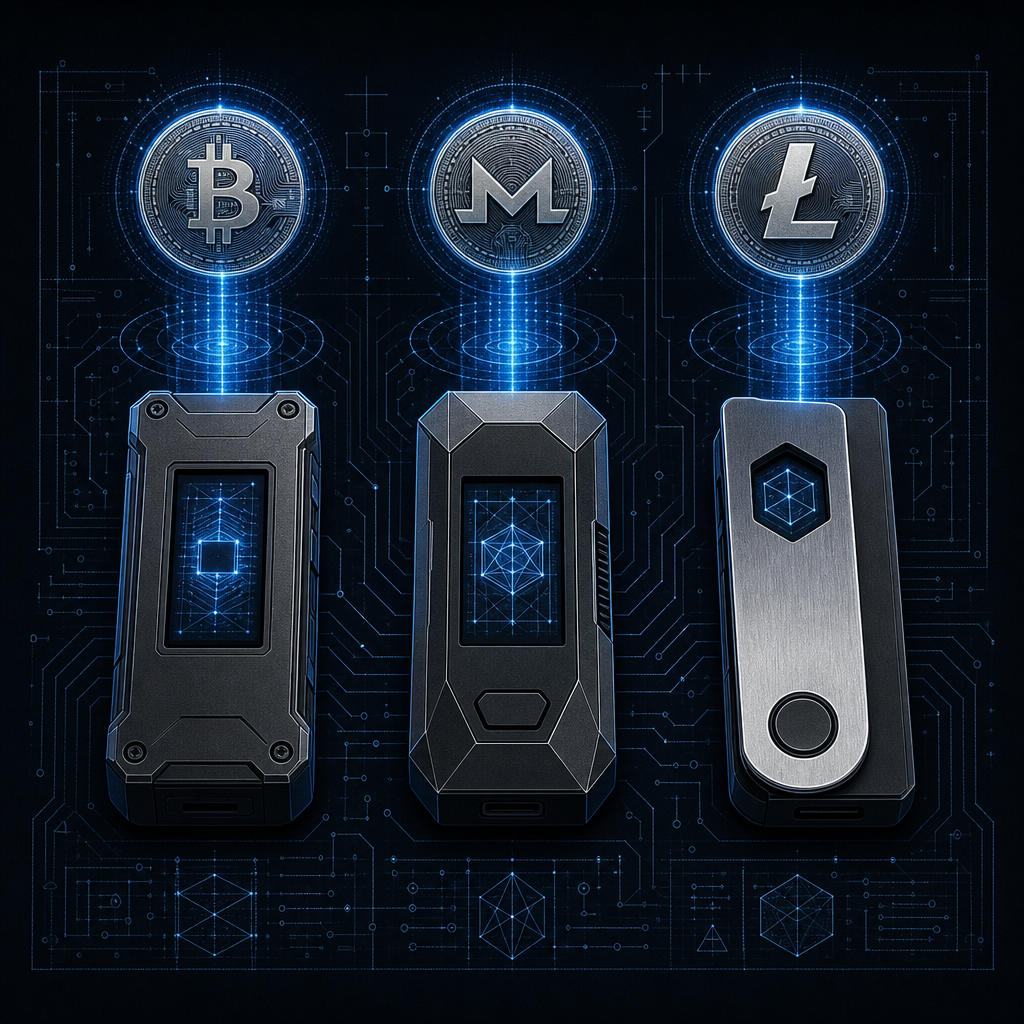
Privacy in money means two things: the chain hides what it can, and you hold the keys. Most crypto fails on at least one. Bitcoin is pseudonymous, chain analysis defeats it without CoinJoin, Payjoin, or Lightning. Monero is private by default. Hardware wallets are mandatory for anything you can’t afford to lose. Self-custody is the whole game.
Bitcoin (BTC)
Pseudonymous by default. Privacy requires CoinJoin (Wasabi, Whirlpool), Payjoin, or Lightning Network. Self-custody by default.
Bitcoin is the reserve asset and the most liquid crypto on Earth. Treat it as a transparent ledger: every transaction is public, and chain analytics companies make a living linking addresses to identities. Privacy tools exist, Wasabi and Whirlpool for CoinJoin, Payjoin for receiver-side mixing, Lightning Network for off-chain payments, but they’re optional. Default Bitcoin is not private Bitcoin. Store in self-custody (hardware wallet, never an exchange) or you’ve already lost.
| Jurisdiction | KYC | Anonymous payment | Audit |
|---|---|---|---|
| Decentralized | None | N/A | Bitcoin Core open-source; public ledger |
Monero (XMR)
Private by default. Ring signatures, stealth addresses, and RingCT hide sender, receiver, and amount. No transparent mode.
Monero is what you reach for when Bitcoin’s transparency is the problem. Every transaction uses ring signatures (sender hidden among decoys), stealth addresses (receiver hidden), and RingCT (amount hidden). No “transparent mode” toggle, privacy is the default, not an opt-in. Lower liquidity than Bitcoin and fewer exchanges list it, but the Monero Research Lab has been auditing and improving the protocol since 2014.
| Jurisdiction | KYC | Anonymous payment | Audit |
|---|---|---|---|
| Decentralized | None | N/A | Multiple academic audits; MRL ongoing research |
Firo (FIRO)
Privacy coin with Lelantus Spark. Trustless on-chain privacy, 215-anonymity-set, no trusted setup. Chainlocks defends against 51% attacks.
Firo (formerly Zcoin) rebuilt its privacy layer around Lelantus Spark, a zero-knowledge proof system that doesn’t require a trusted setup ceremony, unlike older zk-SNARKs. 215-anonymity-set transactions, and Chainlocks defends the chain against 51% attacks. Smaller community and lower liquidity than Monero, but the cryptography is current-gen.
| Jurisdiction | KYC | Anonymous payment | Audit |
|---|---|---|---|
| Decentralized | None | N/A | Lelantus Spark academic paper; open-source |
Pirate Chain (ARRR)
100% private send, every transaction uses zk-SNARKs. No transparent mode. Largest organic anonymity set in crypto.
Pirate Chain forces privacy on every transaction. There’s no public address balance, no transparent send option, zk-SNARKs hide sender, receiver, and amount on every block. Born out of the Komodo ecosystem, it claims the largest organic anonymity set in crypto (meaning the largest pool of real decoys, without synthetic dilution). Exchange footprint is smaller than Monero, and liquidity matters when you’re trading.
| Jurisdiction | KYC | Anonymous payment | Audit |
|---|---|---|---|
| Decentralized (Komodo origin) | None | N/A | zk-SNARKs; community-DAO |
zkLTC / LitVM
â ï¸ MAINNET NOT YET LIVE. LitVM is on testnet only as of June 2026. Treat as forward-looking, not actionable.
LitVM is Litecoin’s EVM-compatible ZK rollup (Arbitrum Nitro stack). zkLTC is the native gas token, not ETH, not LTC. The LiteForge Testnet went live April 2026, but mainnet has not shipped. Don’t promise yourself a working mainnet. If you’re building on Litecoin’s ZK layer, get on the testnet and watch for the mainnet announcement. Don’t put real funds against a chain that hasn’t shipped.
| Jurisdiction | KYC | Anonymous payment | Audit |
|---|---|---|---|
| Litecoin ecosystem | None | N/A | Testnet verified; mainnet pending |
Hardware wallets
Self-custody means hardware wallets. Software wallets on internet-connected devices are fine for small balances and a terrible risk for anything else. Pick one of these three.
BitBox02 (Shift Crypto)
Swiss-made, dual secure chip (EAL6+), microSD backup, optional Bitcoin-only firmware. Accepts Monero.
The BitBox02 is the minimalist’s pick, no buttons, just capacitive touch and a small OLED. Dual secure element chips (EAL6+) handle key generation and signing; the microSD backup means your seed never touches a screen where a camera can capture it. Optional Bitcoin-only firmware reduces attack surface. Made in Switzerland, accepts Monero directly. BitBox02 Nova from ~â¬169; multi-edition from ~â¬179.
| Jurisdiction | KYC | Anonymous payment | Audit |
|---|---|---|---|
| Switzerland | None | Monero | Open-source firmware + hardware; reproducible builds |
Coldcard (Mk4 / Q)
Bitcoin-only, dual secure elements, fully air-gapped via MicroSD / NFC / QR. Duress PIN and brick PIN. Made by Coinkite (Canada).
Coldcard is the paranoid’s wallet, and that’s a compliment. Bitcoin-only (smaller attack surface), dual secure elements, air-gapped signing via MicroSD, NFC, or QR codes. Duress PIN unlocks a decoy wallet; brick PIN wipes the device. Made in Canada by Coinkite. Mk4 from $147; Q from $237 (Q1 2025 release with full keyboard and camera for QR air-gap).
| Jurisdiction | KYC | Anonymous payment | Audit |
|---|---|---|---|
| Canada | None | Bitcoin | Open-source firmware; reproducible builds |
Trezor Safe 3 / Safe 5
Czech-made open-source hardware wallet. Model One is discontinued (supported through 2031), current lineup is Safe 3 and Safe 5.
Trezor is the name everyone knows. The original Model One is discontinued but supported through 2031, don’t buy one new. The current lineup is Safe 3 from $69 (the budget successor) and Safe 5 from $169 (flagship with Secure Element). 1800+ coins supported, fully open-source firmware, reproducible builds. Czech-made by SatoshiLabs.
| Jurisdiction | KYC | Anonymous payment | Audit |
|---|---|---|---|
| Czech Republic | None | Bitcoin | Open-source firmware; multiple third-party audits |
If you’re running the full sovereign stack, the rest of this series walks through the email, DNS, VPN, hosting, search, and AI layers that hold the rest of your digital life together. Start with the Sovereign Builder Protocol for the architecture behind it.
AI
Every prompt you send to ChatGPT or Claude’s free tier is training data by default. Your code snippets, your medical questions, your business strategy, your 3 AM existential queries, all stored on US servers under the CLOUD Act, tied to your account identity, and used to improve the model that serves the next user. You can opt out, but most people never find the setting. The tools below prove you don’t have to make that trade at all.

Disclosure: Venice AI is a sponsor of this post, that’s an affiliate link. I use Venice daily and wouldn’t recommend it otherwise.
Venice AI
The strongest privacy architecture in cloud AI, browser-side encryption, proxy-routed inference, decentralized GPU compute.
Venice encrypts your prompts in your browser before they ever hit a server. The proxy routes them to decentralized GPU providers, each of whom sees only a single encrypted request, not your identity, not your history, not your account. Open-source models by default. Uncensored. No data retention on the inference path. No account required for basic use. This is the closest thing to “local model quality without running a local model” that exists in 2026.
Try Venice AI â (Disclosure: that’s an affiliate link, I use Venice daily.)
| Jurisdiction | KYC | Anonymous Payment | Transparency |
|---|---|---|---|
| Decentralized compute (no single jurisdiction applies) | Email only (none for basic use) | N/A (free tier) | Client-side encryption; zero retention; decentralized GPU routing |
Free tier available. Pro $18/mo (all models, 1k images/day, $10 credits). Pro+ $68/mo (most popular, $75 credits). Max $200/mo (enterprise). · venice.ai/pricing
If you want a deeper look at how Venice fits into a real builder workflow, I wrote the full review here: Venice AI as a Developer Edge.
Ollama (Self-Hosted)
Install and run open-source models on your own hardware, Llama, Mistral, Qwen, DeepSeek, all local.
Ollama is the easiest path to local LLMs. One command installs a model; one command runs it. The models live on your machine, no network calls, no API keys, no telemetry. Apache 2.0 / MIT licensed. A Cloud Pro tier exists if you need datacenter GPUs for larger models, but the local runtime is the point: your data never leaves your box.
| Jurisdiction | KYC | Anonymous Payment | Transparency |
|---|---|---|---|
| Self-hosted (Ollama Inc., US/CA) | None (local) | N/A (free local) | Open-source runtime; local by design |
Free for local models. Pro $20/mo (50x cloud usage). Max $100/mo. · ollama.com
llama.cpp (Self-Hosted)
The canonical local inference engine, smallest memory footprint, MIT-licensed, gold standard.
Georgi Gerganov’s C/C++ reference implementation is what Ollama, Jan.ai, and half the local AI ecosystem are built on top of. If you want the absolute minimum overhead, running quantized GGUF models on whatever hardware you’ve got, this is the bedrock. No abstractions, no UI bloat, just raw inference speed.
| Jurisdiction | KYC | Anonymous Payment | Transparency |
|---|---|---|---|
| Open-source (no jurisdiction) | None | N/A (free) | MIT licensed; widely audited; reproducible |
Free (MIT). · github.com/ggerganov/llama.cpp
Jan.ai
Open-source local-first desktop AI with a polished UI, for people who want Ollama without the terminal.
Jan.ai (built by Menlo Research) wraps local model inference in a clean desktop app for macOS, Windows, and Linux. It bundles an OpenAI-compatible API server, so you can point your existing tools at localhost and they’ll work. Apache 2.0 / MIT. If you’ve got non-technical family members or teammates who need private AI, this is the install-and-go option.
| Jurisdiction | KYC | Anonymous Payment | Transparency |
|---|---|---|---|
| US (Menlo Research); software runs locally | None | N/A (free) | Fully open-source; local-first; OpenAI-compatible API |
Free (Apache 2.0 / MIT). · jan.ai
OpenRouter
Unified API for 400+ AI models with Zero Data Retention mode and a free tier.
OpenRouter is the pragmatic middle ground: you don’t run models locally, but you control which providers see your data. Pay-as-you-go access to 400+ models, key rotation, and a Zero Data Retention mode that prevents logging. Free tier includes 20+ free models. SOC 2 Type I certified mid-2026. If you’re building AI features into an app and need model flexibility without surrendering user data, route through OpenRouter with ZDR enabled.
| Jurisdiction | KYC | Anonymous Payment | Transparency |
|---|---|---|---|
| US (OpenRouter Inc.) | Email only | N/A (free tier) | SOC 2 Type I (2026); ZDR mode; no logs by default |
Free tier (20+ models). Pay-as-you-go for premium. · openrouter.ai/pricing
PrivateGPT (Zylon AI)
Production-ready RAG API layer that runs 100% locally, ingest documents, query with citations, fully offline.
PrivateGPT is the answer to “how do I let an AI read my documents without uploading them to OpenAI?” It runs entirely on your hardware using Ollama or llama.cpp backends, exposes an Anthropic-compatible API, and handles document ingestion, chunking, retrieval, and citation. Apache 2.0. If you’re a developer or team building internal knowledge bases, this is your private RAG stack.
| Jurisdiction | KYC | Anonymous Payment | Transparency |
|---|---|---|---|
| Open-source (Zylon AI) | None | N/A (free) | Apache 2.0; production-tested; fully offline |
Free (open-source). · github.com/zylon-ai/private-gpt
Anti-Patterns: The Defaults I’d Avoid
Privacy is as much about what you don’t use as what you do. The list below is the default-everyone-is-on stack, the tools so popular they don’t even feel like choices anymore. Each one is a leak by design, and “but everyone uses it” is exactly why the leak works. Replace them deliberately, one at a time, in the order they appear in the categories above.
Email: Gmail, Outlook, Yahoo
Google’s entire business model is scanning Gmail content to build an advertising profile. Microsoft has signed up Outlook under the same data-mining logic. Yahoo has been breached at least three times (2013: 3B accounts; 2014: 500M; 2022: the same dataset re-emerged). None of the three is zero-knowledge; all of them scan content for advertising or “abuse”; all of them have handed data to US law enforcement on a routine basis. The proton.me/legal/transparency report page shows what a real privacy posture looks like, Proton contested 988 of 9,301 legal orders in 2025. The big three don’t contest; they hand over.
DNS: Your ISP’s default resolver
Your ISP’s DNS server sees every domain you look up. Every site. Every app. Every background beacon. They claim not to log. Their terms of service in every US state explicitly allow them to. And in the CLOUD Act era, they don’t even get a choice. Any of the encrypted resolvers above (Mullvad DNS, AdGuard, NextDNS, Control D, Rethink) takes your ISP out of that trust chain in two minutes. Free Mullvad DNS is the only one that requires zero account at all.
VPN: NordVPN, Surfshark, ExpressVPN
The “big three” consumer VPNs have all been acquired by a single holding company (NordSec / Kape Technologies / ExpressVPN parent). They’ve all had security incidents (NordVPN 2018 server breach; Surfshark audit gaps). They all run tier-1 marketing that funds influencer sponsorship empires. None of them are bad products in absolute terms, they’re worse than the audited, anonymous-registration alternatives (Mullvad, IVPN) for the threat model this post is built around. If your threat model is “I want to watch Netflix from another country,” they’re fine. If your threat model is “I want a VPN provider that doesn’t know who I am and can’t be compelled to log,” they’re not.
Hosting: AWS, Azure, GCP
All three are CLOUD Act jurisdictions. All three have signed up to government data-sharing programs. All three have deplatformed paying customers mid-month on policy grounds with no notice. Hetzner, BuyVM, 1984, FlokiNET, and Njalla are not just philosophically different, they have different operational realities. A VPS on 1984.is in Iceland can’t be silently turned off by a US subpoena. A domain registered through Njalla doesn’t have your name on it. The big three hyperscalers are appropriate for serving static public content; they’re not appropriate for anything that touches your stack’s identity.
Search: Google, Bing, Google’s AI Overviews
Already covered above. ~90% of all queries go to one of these; the entire 90% is a profile machine. Plus the new wave of AI-powered search (Google AI Overviews, Perplexity, SearchGPT, Microsoft Copilot) hands your full reasoning chain, the medical question, the financial decision, the relationship problem, the legal question you wouldn’t put on a billboard, to a model that trains on it by default. Use one of the five above; if you must use an AI search tool, point it at the privacy-first alternatives.
Comms: WhatsApp, Telegram, iMessage, Discord
WhatsApp uploads your contact book to Meta by design. Telegram is cloud-encrypted but not E2E by default, server-side access is the feature, not the bug. iMessage is E2E but locked to Apple, and Apple holds the keys to iCloud backups of those messages anyway. Discord is a surveillance platform that happens to have voice channels. Signal, Session, SimpleX, Briar, and Element/Matrix are not just “more private”, they’re built on the principle that the provider cannot read your messages by design. The right tool depends on your threat model; the wrong tool is the one that already has the key.
Money: Coinbase, Kraken, Binance (KYC on-ramps)
If you acquire a privacy coin or Bitcoin on a KYC exchange, your identity is permanently linked to that withdrawal address by the exchange’s KYC records, and those records are sold to chain analytics firms. Coinbase’s privacy policy explicitly allows it. Kraken’s reports show chain analytics integration. Binance’s compliance posture is hostile to the sovereign stack by design. The right path is non-KYC acquisition, Bisq, Robosats, atomic swaps, HodlHodl, in-person cash, paired with self-custody in a hardware wallet. The wrong path is “I bought Monero on Coinbase, it’s private.” It isn’t. Your on-ramp isn’t.
AI: ChatGPT free tier, Claude.ai free tier, Microsoft Copilot, Google Gemini
Free-tier prompts on ChatGPT, Claude, and Gemini are training data by default. The opt-out is buried. The paid tiers ($20/mo) don’t train on your data but still log metadata, retain conversation history, and route through US CLOUD Act infrastructure. The 5 tools above prove you don’t have to make that trade at all, Venice AI for cloud privacy, Ollama / llama.cpp / Jan.ai / PrivateGPT for local, OpenRouter with ZDR for the flexible case. If you must use a US AI, pay for it (so your data isn’t training material) and disable chat history and training in every setting you can find.
The anti-patterns aren’t evil, most of them are good products solving a different problem. The sovereign stack is for people whose problem is the one they actually solve, not the one the product’s marketing claims to solve. Replace deliberately, one layer at a time. The discipline is the point.
Build the Rest of the Stack
What you have above is the eight layers of the 2026 sovereign stack. It is not the only stack, and it is not finished, every quarter, the people who maintain it re-audit at least one layer against the current vendor pages, the current threat model, and the current court rulings. You should do the same. The links below are the next pages to read, in the order I’d read them.
- The Sovereign Builder Protocol, the operating philosophy behind owning more of your tools, building with discipline, and spending less. This is the “why” behind the stack, including why the categories are ordered DNS â VPN â Email â Search â Comms â Money.
- Private AI Is Becoming the New Developer Edge: Why Venice AI Fits the 2026 Shift, deeper look at how Venice AI fits into a real builder workflow, with the threat model that makes it the default for code, strategy, and sensitive queries.
- Privacy and Digital Rights Hub, the umbrella page for the whole stack: KYC resistance, age verification creep, private search, Nostr, and the practical ways to keep speech from becoming permissioned.
- Mandatory ID Is Coming for Phones and Social Media. Here’s How to Move to Nostr Before the Gate Closes, the speech-side version of the sovereignty problem. If you can be de-platformed, you can be silenced. Nostr is the censorship-resistant identity layer; the money section above is the censorship-resistant value layer.
- Google AI Search Privacy: Better Alternatives to Protect Your Searches, the dedicated breakdown of the AI-search problem, with the tools that handle full-reasoning-chain queries without training on them.
One last thing.
None of this is a one-time setup. It’s a habit. Every quarter, audit one part of your stack: the wallet you use, the exchange you trust, the AI tools you paste sensitive code into, the search engine that sees your most private questions, the messenger that holds the thread on your most sensitive conversations. Sovereignty isn’t a destination. It’s the discipline of choosing who gets to see what, on purpose, every time.
Take what you need from this list. Replace the rest with what fits your threat model. The point is not to use my exact stack, the point is to have a stack, deliberate, verified, and maintained. The default stack the internet hands you is the leak. Anything you build on top of that is the sovereignty.
Update: what this shortlist actually costs, read at the providers’ own pages on 29 September 2026
The table earlier on this page compares jurisdiction, identity requirements and payment rails. This one adds the column that ages fastest: the published price, read directly from each provider’s own page on 29 September 2026. Where a provider’s own page does not state something, that cell says so rather than guessing, and nothing here is taken from a review site or a directory.
| Provider | What its own page publishes | Source |
|---|---|---|
| Njalla | Its pricing page publishes domains and servers in euro, with domain tiers running from 15 euro per year upward. Its own words on payment: “We accept lots of crypto currencies, like Bitcoin, Litecoin, Monero, Ethereum … and we even support PayPal.” Its FAQ describes the servers as sitting in “secret locations in Sweden” while the operating entity, njalla.srl, is registered in Costa Rica, which is the split this page now states correctly. | njal.la/pricing |
| IncogNET | Advertises “KVM Virtual Servers in the USA and Europe” with Amsterdam named as a location, and describes itself as “Protectors of Online Privacy & Free Speech Since 2020”. Entry price 4.62 US dollars per month billed semi-annually at 27.75, then 7.60 per month, 12, 20, 28, 36 and upward. Accepted payment methods were not stated on the pages reviewed. | incognet.io/kvm-vps |
| OrangeWebsite | Iceland-based. Its Cloud VPS page is titled “Green Virtual Servers Iceland” and prices start at 29.90 euro per month, rising through 45.90, 59.90, 89.90, 135.90 and 179.90, with published discounts for quarterly through triennial billing. Its homepage states the payment rails plainly: “Cryptocurrencies, PayPal, Cash by Mail accepted!” | orangewebsite.com/hosting/vps |
| BuyVM | KVM 128 at 25.00 US dollars per year, KVM 256 at 5.00 per month, KVM 512 at 10.00 per month, KVM 1024 at 20.00 per month, 2GB at 40.00 per month and 4GB at 80.00 per month, with Windows Server included at no extra cost. Its terms state that it takes what it calls a “Law of the Land” stance, meaning hosted content must follow the law of the country the service runs in. Accepted payment methods were not stated on the pages reviewed. | buyvm.net/kvm-vps |
Two things this table deliberately does not do. It does not rank the providers, because the right answer depends on what you are hosting and which jurisdiction you need it to sit in. And it does not repeat a claim about any of them that their own pages do not make: where a payment method or a jurisdiction is missing from a provider’s own site, the cell above says so, because a directory’s summary of a host is not the host’s own policy.
One pattern worth knowing before choosing any of them. An offshore host sells you a jurisdiction and a payment rail, not immunity. The law of the country the machine sits in still applies to the operator, as BuyVM’s own terms say out loud, and the operator is a company with a name, a registration and a bank account, whichever country it files in. Prices and payment rails also change without notice, so re-read the provider’s own page before you buy rather than trusting this table’s date.
Does Njalla accept Monero?
Its own pricing page states: “We accept lots of crypto currencies, like Bitcoin, Litecoin, Monero, Ethereum … and we even support PayPal.” That is the provider’s wording, read on 29 September 2026.
Where is Njalla registered, and where are its servers?
The operating entity is njalla.srl, registered in Costa Rica. Its FAQ describes the servers themselves as running in secret locations in Sweden. Both statements are accurate, they are not the same statement, and keeping them apart is the correction this page carries.
Which of these hosts is cheapest?
On the entry prices published on 29 September 2026, the lowest figure here is BuyVM’s KVM 128 at 25.00 US dollars per year, followed by IncogNET from 4.62 per month on semi-annual billing. OrangeWebsite’s Cloud VPS starts at 29.90 euro per month, and Njalla publishes its plan list in euro on its own pricing page. Price is the wrong first question though. Jurisdiction, what the operator does when a complaint arrives, and whether it accepts the payment rail you need all matter more than the entry tier.
Frequently asked questions
What is the best Njalla alternative for anonymous VPS hosting in 2026?
Which VPS providers require identity verification?
Can you pay for hosting with Monero in 2026?
Read next
The Beginner’s Homelab: What to Buy First, What to Skip
15 min read·Published Sep 29, 2026NostrXFacebookRedditTelegramSMSCopyOn this page▾What a Homelab Actually IsStage One: The First $200Stage Two: Up to $500 TotalStage Three:…
Run a Hermes AI Gateway on an $80 Android Phone (Termux)
0 0 votes Article Rating Part of Sovereign Builder Protocol Why would you run an AI agent on a phone instead of…
Private AI Workflows: Keep Client Secrets Off Someone Else’s GPU
0 0 votes Article Rating Part of AI Tools + Private AI Hub In 2023, two New York lawyers were fined $5,000…