Last updated: August 15, 2026
Last updated: June 26, 2026 Current threat level: SEVERE
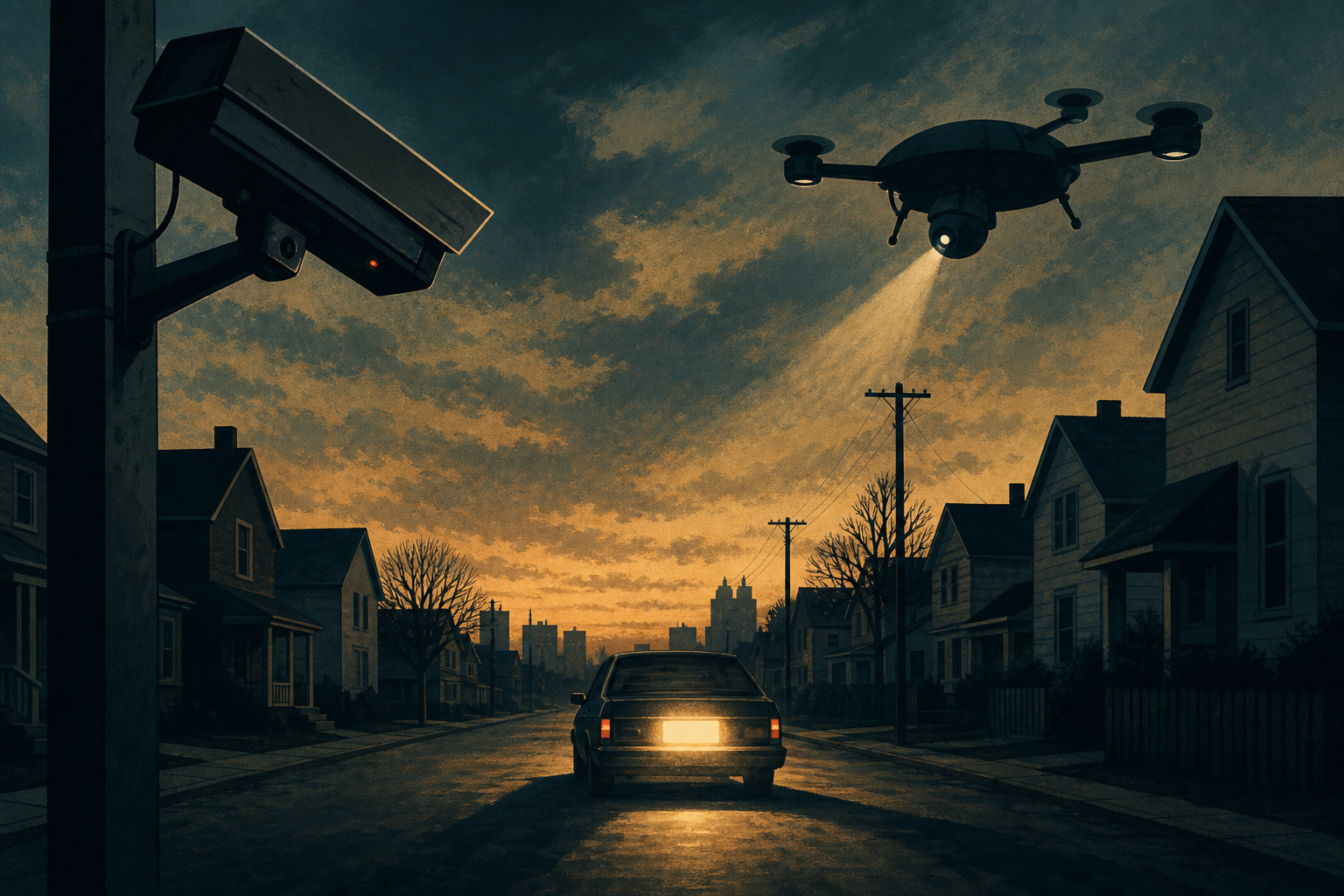
Mass surveillance in the United States is no longer hypothetical. It is not a future risk, a conspiracy theory, or a paranoid fantasy. It is a $7.5 billion industry with 90,000 cameras on American roads, 1,500+ police drone programs in the sky, and a court system that has not yet decided whether any of it is constitutional.
This is the field manual for living inside that system without surrendering to it.
It covers what has been built, what the courts have and have not said, what tools exist for seeing it, evading it, and dismantling it, and what the American tradition of civil disobedience has to say about resisting systems the law has not yet caught up to.
The position of this article is simple: mass surveillance infrastructure is unconstitutional regardless of whether current laws technically permit it. Carpenter v. United States (2018) established that pervasive location tracking is a search. The fact that lower courts have not yet applied that holding to ALPRs and drones does not make those networks constitutional. It makes the courts slow.
You do not have 10 years to wait for the Supreme Court to catch up.
What Has Been Built
Flock Safety: The Private Company Running a National Panopticon
Flock Safety is an Atlanta-based startup founded in 2017. As of June 2026, it has raised approximately $950 million in venture funding, most recently a $275 million round in March 2025 led by Andreessen Horowitz at a $7.5 billion valuation. Its 2024 revenue was $300 million in ARR. It employs roughly 1,500 people. Its CEO is Garrett Langley. (Reuters, March 2025; CNBC Disruptor 50, June 2025)
The company operates approximately 90,000 cameras across approximately 7,000 networks in 49 states, scanning vehicle license plates an estimated 20 billion times per month. More than 5,000 law enforcement agencies are under contract. (ACLU of Massachusetts, October 2025)
That is the public-safety side. Flock also sells to private customers: HOAs, apartment complexes, 7 of the 10 largest U.S. shopping malls, 10 of the 40 largest U.S. healthcare providers, and more than 100 public school systems. In June 2025, Flock launched "Business Network" allowing private companies to share data and add vehicles to hotlists collaboratively. (Flock Safety blog, June 2025)
The Hardware
Flock’s product line, as of 2026:
- Falcon — fixed ALPR camera. Solar-powered, cellular-connected. Captures plate, make, model, color, and "vehicle fingerprint" attributes (bumper stickers, dents, mismatched colors, paper plates) up to 75 feet away at speeds up to 100 mph, day or night via infrared.
- Sparrow — compact ALPR.
- Condor — pan-tilt-zoom (PTZ) camera with AI face tracking. Records high-resolution video with a 30-day archive. This is not a license plate reader. It is a continuous people-tracker.
- Raven — audio sensor marketed as gunfire detection. Records audio in 5-second increments. After EFF reporting in December 2025, Flock was forced to amend marketing materials suggesting Raven would also listen for "human distress" — meaning screaming.
- Aerodome — Flock’s drone division. The company acquired drone manufacturer Aerodome in October 2024 and announced a 100,000 square foot manufacturing facility in Atlanta.
A single Flock nationwide search can query 83,345 cameras across 6,809 networks in seconds. A Texas deputy ran such a search for a woman who had a self-administered abortion; the search reason field read, verbatim: "had an abortion, search for female." (EFF, October 2025)
The ICE Pipeline
Flock does not have a direct contract with U.S. Immigration and Customs Enforcement. It does not need one. Local police perform Flock searches on ICE’s behalf through what 404 Media called a "side-door."
In May 2025, 404 Media published a bombshell investigation based on a leaked trove of Danville, IL police search logs. It documented more than 4,000 nationwide lookups by local and state police conducted at the behest of the federal government or for immigration reasons. Officers wrote "immigration," "ICE," "ICE+ERO," "ICE WARRANT" in the reason field. Every search listing "immigration" as the reason occurred after Trump’s inauguration. (404 Media, May 2025)
In February 2026, The 74 and The Guardian revealed that police nationwide use school district Flock cameras for immigration enforcement. Alvin Independent School District in Texas had 733,000+ searches by 3,100+ agencies in one month, including 620 immigration-related searches by 30 different agencies. An administrative assistant at Huffman ISD gave U.S. Border Patrol direct access to district cameras. (The 74, February 2026)
Flock’s own disclosure in January 2026 confirmed that before public exposure, the company ran pilot programs with the FBI (2021–2023), National Park Service, ATF (Nashville and Louisville), NCIS, Homeland Security Investigations (March–May 2025), and Customs and Border Protection (May–August 2025). CEO Garrett Langley had previously denied having federal contracts. (NPR, February 2026)
The Drone Stack
The cameras on poles are one half of the surveillance network. The cameras in the sky are the other.
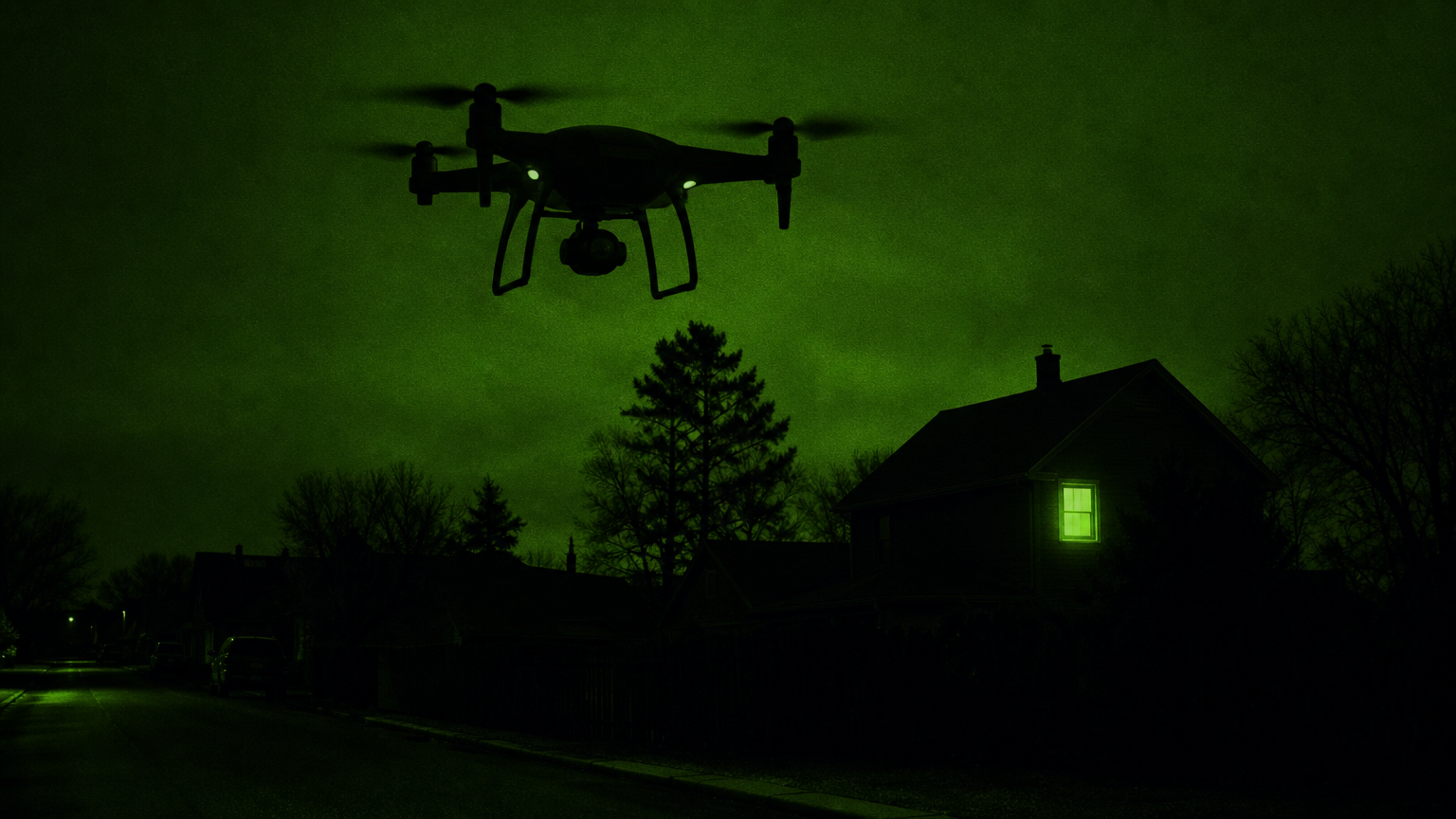
As of 2026, more than 1,500 U.S. law enforcement agencies operate drone programs, a number that jumped sharply after a 2025 FAA rule change. (State of Surveillance Atlas, 2026)
The dominant programs:
- Chula Vista, CA Police Department launched the first "Drone as First Responder" (DFR) program in October 2018. As of May 2026, it has flown more than 25,000 missions, using DJI Matrice M300 RTK and M350 RTK aircraft on Motorola/Cape software. Four launch sites, two full-time pilots, 24 collateral-duty pilots. (Chula Vista PD UAS Program; DroneXL, May 2026)
- Las Vegas Metro Police runs a Skydio X10-based DFR program with a dedicated drone operations center unveiled January 9, 2026. ShotSpotter gunshot detection is integrated into the DFR dashboard.
- NYPD launched a citywide Drone First Responder program in November 2024 across three boroughs. The NYPD UAS Impact and Use Policy was finalized February 4, 2026. Per the Surveillance Technology Oversight Project, NYPD drones are used for "patrol" — not just emergencies. (NYPD UAS Policy, February 2026)
The federal side: Anduril Industries operates more than 200 Sentry towers along the U.S.–Mexico border on Lattice command-and-control software under a $25M CBP contract. CBP flies General Atomics MQ-9 Predator B aircraft. ICE has confirmed use of small drones for protest surveillance. During the January 2026 federal immigration surge in Minneapolis, residents reported widespread low-flying drone activity at night; Minneapolis PD and Minnesota State Patrol denied operating them; DHS refused to comment. (Washington Post, January 2026; MPR News, March 2026; ACLU, March 2026)
The FAA Reauthorization Act of 2024 (Public Law 118-63) created a performance-based BVLOS (Beyond Visual Line of Sight) pathway at 49 U.S.C. § 44811 and barred federal procurement of drones from China, Russia, Iran, North Korea, Venezuela, and Cuba. The FAA published the Part 108 BVLOS NPRM on August 7, 2025 (Federal Register Doc. 2025-14992). The final rule has not yet been issued as of June 2026. When it lands, police drone flights will become dramatically more frequent, because Part 108 removes the line-of-sight pilot requirement that currently constrains missions.
The Surveillance Payloads
The hardware mounted on those airframes is not just cameras:
- Electro-optical and thermal imaging (FLIR)
- License plate readers (ALPRs in the sky)
- Face recognition (accuracy from altitude is contested but improving)
- ShotSpotter / acoustic gunshot detection integrated into the DFR dashboard
- Cell-site simulators (Stingrays) — the same devices the FBI used over Ferguson in 2014 and over D.C. in 2020
- "Spotlight" surveillance payloads
- In at least one LVMPD configuration, window-busting payload delivery and IR
Kyllo v. United States (2001) held that using thermal imaging to look into a home is a search under the Fourth Amendment. That holding has not yet been applied to drone thermal imaging of homes at scale. It should be.
The Constitutional Case (Quick Primer)
The Supreme Court has been moving — slowly — toward recognizing that pervasive digital surveillance is a search under the Fourth Amendment.

The foundational cases:
- **United States v. Jones, 565 U.S. 400 (2012)** — attaching a GPS tracker to a car is a trespass-based search. Justice Sotomayor’s concurrence flagged that "awareness that the Government may be watching chills associational and expressive freedoms."
- **Riley v. California, 573 U.S. 373 (2014)** — searching a phone requires a warrant. Digital data accumulation is categorically different from physical searches.
- **Carpenter v. United States, 585 U.S. 296 (2018)** — collecting seven days of Historical Cell Site Location Information is a search. Justice Roberts wrote: "When the Government tracks a person’s movements over an extended period of time, the extensive nature of the data collected makes the surveillance a search." The third-party doctrine (your data held by a phone company loses Fourth Amendment protection) does not survive Carpenter for pervasive location tracking.
- **Kyllo v. United States, 533 U.S. 27 (2001)** — thermal imaging of a home is a search. Novel surveillance technology aimed at constitutionally protected spaces is presumptively a search.
- **Florida v. Riley, 488 U.S. 445 (1989) — naked-eye observation from a helicopter in navigable airspace (400+ feet) is not a search. Caveat:** plurality opinion. Lower courts have increasingly limited Riley as drone technology has proliferated.
ALPRs are location tracking. Drone surveillance is location tracking. Flock’s 90,000-camera network is, by Carpenter‘s logic, a system of pervasive location tracking at scale.
The live federal cases:
| Case | Court | Filed | Status | Claim |
|---|---|---|---|---|
| Commonwealth v. Bell, 113 Va. Cir. 316 (2014) | Norfolk Circuit Court (VA) | 2024 | On appeal to VA Court of Appeals; EFF amicus Sept 2025 | First trial-court ruling holding warrantless ALPR queries unconstitutional |
| Schmidt v. City of Norfolk | E.D. Va., on appeal to 4th Circuit | 2024 | Summary judgment for city Jan 27, 2026; plaintiffs appealed; EPIC amicus Apr 20, 2026 | Residents challenge 170+ Flock ALPRs as Fourth Amendment violation |
| SIREN v. City of San Jose | N.D. Cal. | Nov 18, 2025 | Active; 3.96M searches of 474 cameras in 12 months | EFF/ACLU challenge warrantless ALPR queries — EFF case page |
| Javorsky v. Flock Group | Superior Court of California, San Francisco | Feb 2026 | Active | Class action alleges Flock violates CA privacy law by sharing data nationally without consent |
| Institute for Justice v. City of San Jose | Federal (N.D. Cal.) | Apr 15, 2026 | Active | Three residents challenge 500-camera ALPR network; plaintiffs allege warrantless surveillance, immigration enforcement misuse, stalking by officers |
Sources: ACLU Schmidt case page; EFF SIREN case page; KTVU Javorsky; IJ case page; EFF Bell amicus
The federal courts are split. The Fourth Circuit will decide Schmidt. EFF and ACLU are fighting in California. Until these cases are resolved, the constitutionality of the entire ALPR network is an open question. Open questions do not stop the cameras from running.
The Resistance Toolkit
This is the part where the surveillance industry wants you to feel powerless. You are not.
See It First: Map the Network
You cannot resist what you cannot see. Three projects have done the cartography for you:
- DeFlock (deflock.org) — open-source crowdsourced ALPR map. As of June 2026, 107,128 license plate readers mapped, more than a third of them Flock devices. Run by Will Freeman. In early 2025, Flock sent Freeman a cease-and-desist letter claiming trademark dilution. He refused. EFF backed him. Flock backed down. The map is still up. (EFF, February 2025)
- EFF Atlas of Surveillance (atlasofsurveillance.org) — 15,071+ datapoints on law enforcement surveillance technology across the U.S., including ALPRs, drones, face recognition, and predictive policing systems.
- HaveIBeenFlocked.com — searchable index of Flock audit logs obtained via public records requests. Built by Chris van Pelt. Shows whether your plate has been searched, and by which agency.
- ALPR Watch (alprwatch.org) — companion app for navigation, with a suspected-location feature added December 2025.
Print the maps for your city. Bring them to city council meetings. Bring them to your HOA. The cameras are not invisible. The industry just relies on you not looking.
License Plate Countermeasures
A healthy pile of products exist for making your plate harder to read by ALPR. Their effectiveness against modern Flock cameras is partial, not absolute. None of them is a magic cloak. All of them carry some legal risk depending on your state.
Verified vendors and 2026 pricing:
| Vendor | Product | Price | Mechanism | Notes |
|---|---|---|---|---|
| PhotoBlocker | Reflective spray | ~$30 | Hyper-reflective clear coat; reflects camera flash | Flash-dependent — largely ineffective against modern IR-based ALPRs like Flock |
| PhotoBlocker | PhotoShield clear cover | ~$30 | Embedded optics reflect flash | Same flash-dependent limitation |
| Fantom | Electrochromic blackout cover | ~$299+ | Turns opaque at button press | Effective but obvious; high legal risk if observed by police |
| Reflectacles | IR-reflective eyewear | ~$120 | Reflects IR to overwhelm IR cameras | Currently sold out — restocking August 2026 |
| Cap_able | Adversarial-pattern clothing | €127–€670 | Patented patterns defeat face recognition | Italian startup; CNN/BBC/Wired coverage; verified active |
| Mission Darkness | Faraday bags | $20–$300+ | Blocks all RF to phone | USA-assembled; LE/military grade; verified active |
| SLNT | Faraday bags | $30–$200+ | Blocks all RF | 9 military contracts; verified active |
| GoDark | Faraday bags | $60–$625 | Blocks all RF | Verified active |
Products removed from this guide after vendor verification (June 2026):
- Project KOVR — dormant since 2023, no current sales
- DroneWatch.org — domain does not resolve
- iR Invisi-Plate (RadarBusters) — product page 404, likely discontinued
State legality — the short version:
Specific anti-cover statutes are on the books in 8 states + DC. In other states, general anti-obstruction laws still apply.
| State | Status | Statute | Notes |
|---|---|---|---|
| New York | BANNED (sale) | S.4977 (2025); V&T Law § 402-b | Bans sale of plate covers effective Jan 1, 2025 |
| California | BANNED | Vehicle Code § 5201.1(c) | Sale, manufacture, AND use prohibited |
| Colorado | BANNED | C.R.S. § 42-3-202(2) | Any device obscuring plate illegal |
| Florida | BANNED (new 2025) | Fla. Stat. § 316.605 (eff. Oct 1, 2025) | Misdemeanor to block or cover plate |
| Illinois | BANNED (since 2007) | 625 ILCS 5/10-400 | $75 fine; frames covering info prohibited |
| Pennsylvania | BANNED | 75 Pa.C.S.A. § 1332 | $100 summary offense; tinted strictly illegal |
| Texas | BANNED (if impairs readability) | Tex. Trans. Code § 504.945 | Covers with blurring or reflective matter |
| Washington, DC | BANNED | DC Code § 50-1501.04 et seq. | Per MPD public guidance |
In the other 42 states: assume the safest interpretation is that clear covers are generally tolerated; tinted or reflective covers can be cited under general anti-obstruction statutes; and the legality of any specific product should be verified against your state DMV’s current guidance. (NCSL License Plate Policy)
The constitutional framing of this article is civil disobedience: the legality of plate-cover laws is itself constitutionally suspect under Carpenter, because the government is asserting a right to photograph and track your car continuously while simultaneously criminalizing your attempt to opt out. You will not win that argument at a traffic stop. You might win it in an organized litigation campaign.
Effectiveness reality check: Multiple independent tests have found many plate-countermeasure products partially defeated by modern ALPR systems using IR illumination and high-DPI sensors. Expect partial defeat, not total invisibility. Combine multiple countermeasures for best effect.
Vehicle Route and Movement Countermeasures
The most reliable countermeasure is not giving them your plate to read.
- Route planning — use DeFlock and ALPR Watch to identify camera-dense corridors; vary routes; avoid fixed capture points (gas stations, parking lots, residential driveways, especially HOAs with Flock).
- "Going dark" — limit plate visibility only at specific times (a flip-down cover you only deploy in camera zones).
- Ride-share, rental, personal — every option has tradeoffs. Personal vehicles are tied to your name. Rental plates can be tracked to your credit card. Ride-share drivers carry interior-facing cameras (Lyft and Uber both record continuously as of 2025).
- Crowdsourced counter-cartography — ACLU-affiliated local coalitions publish city-specific ALPR maps.
Biometric Countermeasures
If the cameras cannot read your face, they cannot track you by face.
- CV Dazzle makeup (adam.harvey.studio/cvdazzle) — asymmetric high-contrast makeup designed in 2010 to defeat Viola-Jones face detection. Caveat: 2025 research (arXiv 2412.13507) shows modern deep-learning detectors have largely defeated CV Dazzle. Still works against older camera systems. Combine with other methods. Original patterns are an art project, not a practical defense.
- Cap_able (capable.design) — Italian startup, patented adversarial-pattern clothing. Priced €127–€670. CNN, BBC, Wired coverage. Verified active as of June 2026.
- Reflectacles eyewear (reflectacles.com) — IR-reflective lenses and frames that overwhelm IR-based cameras. Currently sold out; restocking August 2026.
- IR LEDs in glasses or hoodies — projects IR light at the camera, disrupting IR-based face mapping. Highly effective against IR cameras, useless against RGB. Legal status: IR LED emission is legal in the U.S. (FCC regulates radio frequencies, not IR light).
- Face mask + sunglasses — effective against both human observers and many algorithms.
The mask law reality: 23 states plus D.C. have anti-mask laws on the books as of September 2025 (ICNL database). Most are intent-based (you have to be committing a crime or depriving someone of civil rights). The general-ban states (Alabama, Georgia, Louisiana, Minnesota, North Carolina, South Carolina, Virginia, West Virginia) have broader reach but include medical and/or religious exceptions. Anti-mask statutes were mostly passed in the 1940s and 1950s to break the Klan, then re-weaponized after 2020 against left-wing protesters. The constitutional status of forcing protesters to show their faces to face-recognition systems is itself an open question the ACLU is litigating.
Phone and Signal Countermeasures
Your phone is a tracking device that happens to make calls.
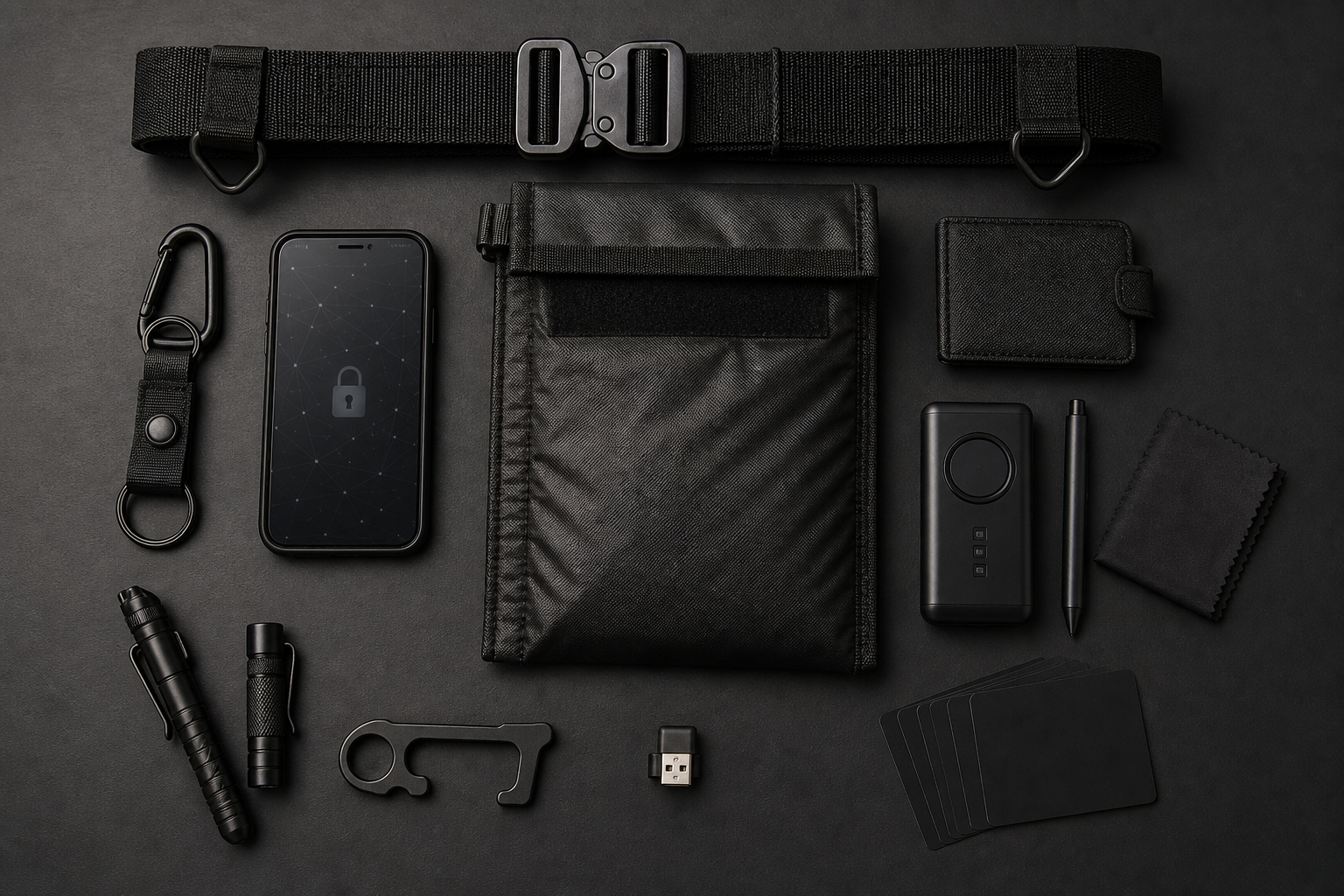
- Faraday bags — Mission Darkness, SLNT, and GoDark are all verified active vendors as of June 2026. Put the phone in, wait two minutes, call it from another phone. If it rings, the bag is defective.
- IMSI catcher detection — SnoopSnitch (Android, requires root + Qualcomm chipset) and AIMSICD (Android, open-source, also requires root for full detection) analyze mobile radio data and warn about silent SMS and IMSI catchers. These apps catch Stingrays. They will not run on unrooted phones. (SnoopSnitch on Google Play; AIMSICD on GitHub)
- Burner phone practices — even "burner" SIMs are increasingly traceable through IMSI correlation. The robust answer is cash-purchased, rotated phones with no consistent identity across them. Carry a separate phone for protests, not your daily driver. ACLU-DC’s protest guide: disable face and fingerprint unlock, use a strong passcode, put the phone in airplane mode or a Faraday bag, leave the primary phone at home. (ACLU-DC guide)
- Car key fob relay protection — a Faraday pouch for your key fob prevents relay attacks against your car. Different threat, same physics.
Drone Countermeasures
Civilian drone countermeasures are mostly detection, not interdiction. Active countermeasures are heavily restricted.
Detection apps (legal, civilian):
| Tool | Type | What It Does | Notes |
|---|---|---|---|
| Drone Scanner (Dronetag, Gen 2) | Remote ID broadcast reader | Detects drones broadcasting Remote ID per 14 CFR Part 89. Free app; $99 hardware receiver improves range. | Only detects Remote ID-compliant drones; some police and military drones do not broadcast Remote ID. dronetag.com/apps |
| DroneWatcher | RF-based | Passive RF detection of drone control signals | Android tablet / phone + DroneWatcher hardware |
| OpenSky Network | ADS-B | Tracks manned aviation; some larger drones file ADS-B | Open-source; gold standard for open flight data |
Critical clarification on "AirGuard": There is no Apple + ACLU drone-detection app. Two different products share the name:
- TU Darmstadt AirGuard — detects Bluetooth tracking devices (AirTags, SmartTags, Tile). Not drones.
- AirSight AirGuard — commercial drone detection software for enterprise and government. Not consumer.
Active countermeasures — the legal reality:
- Jamming any drone is a federal crime for civilians. 47 U.S.C. § 333 makes willful or malicious interference with radio communications a federal offense. The FCC’s maximum penalty per jammer is $112,500, seizure, and possible imprisonment. (FCC Jammer Enforcement; 47 USC §333 full text)
- 18 U.S.C. § 1367 makes intentional or malicious interference with a satellite’s operation punishable by up to 10 years in prison. GPS jamming of a drone falls within this. (Cornell LII)
- Federal agencies with statutory counter-UAS authority: DHS (6 U.S.C. § 124n), DoD (10 U.S.C. § 130i), DOJ, DOE. State and local law enforcement do not have this authority. Neither do you. (DHS C-UAS; DoD 10 USC 130i)
- Civilian legal alternatives: report the drone to local police and the FAA DroneZone at dronezone.faa.gov. Document the sighting — video, photo, time, location, Remote ID broadcast — for later civil liberties complaints or ACLU reports.
If you are tempted to buy a portable drone jammer from a foreign website, understand that U.S. federal prosecutors have obtained convictions for possession and use of jammers, and the FCC has imposed heavy fines. This is not a legal gray zone. This is a federal crime. Whether it is a constitutional crime, given what the drones are doing, is a separate question the courts have not answered. The honest answer is: do not jam.
Physical Direct Action: The Civil Disobedience Tradition
This is the part of the article where the surveillance industry and law enforcement want a disclaimer. Here is the honest version instead.
Property destruction targeted at mass surveillance infrastructure is a crime. It is also part of a long American tradition of principled civil disobedience against state overreach. The Boston Tea Party was property destruction. The Underground Railroad violated federal fugitive slave laws. Draft resistance during Vietnam was federal crime. Suffragettes destroyed property. Civil rights activists destroyed property (sit-ins at segregated lunch counters are property trespass by any legal definition). These were crimes. They were also, in the historical frame, legitimate acts of political resistance against systems the courts had not yet caught up to.
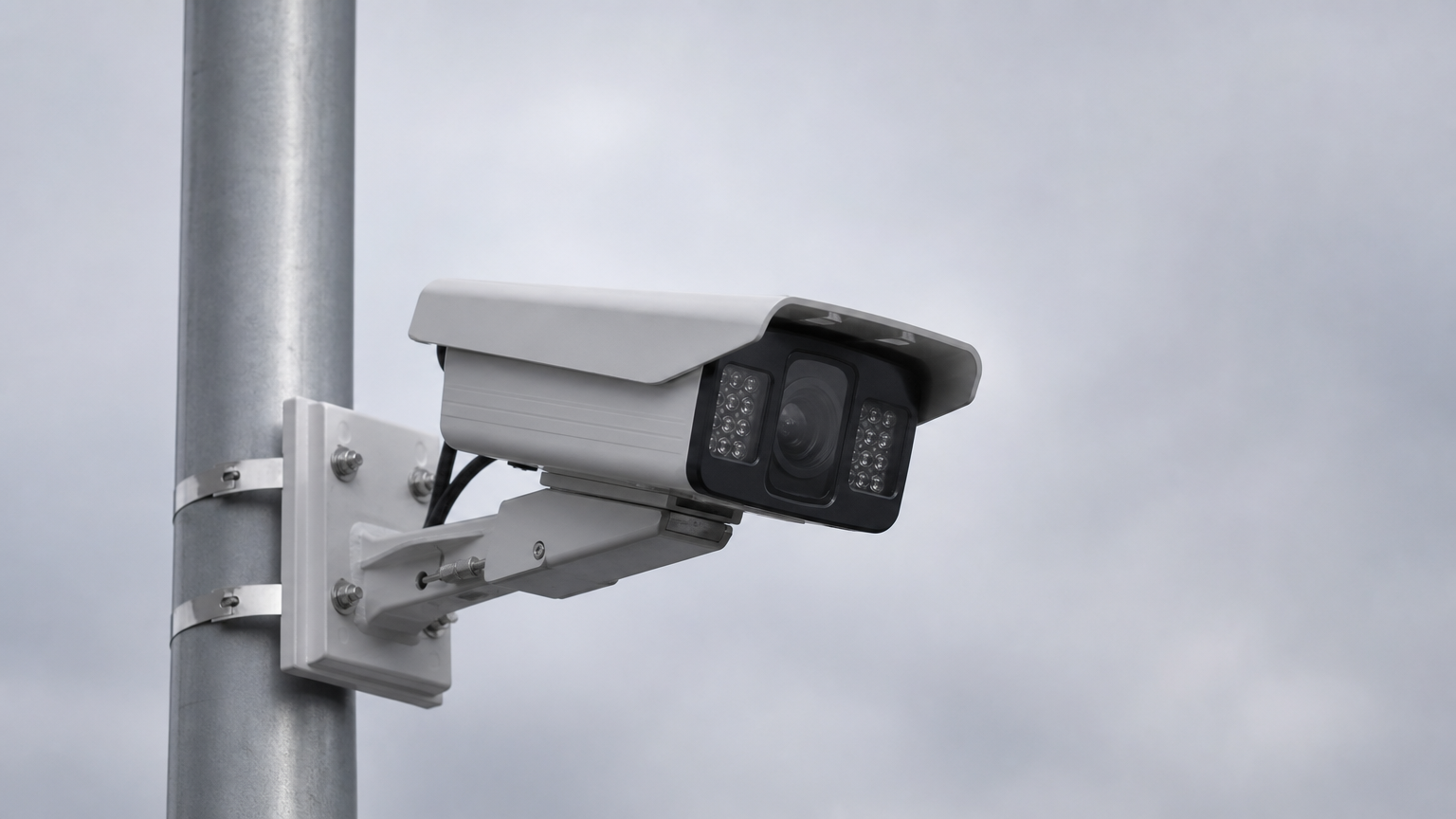
In 2025 and 2026, a sustained wave of direct action targeted Flock cameras specifically. At least 13 documented incidents across the United States:
| Date | Location | Incident | Status | Source |
|---|---|---|---|---|
| Jul 27–28, 2025 | Cathedral City, CA | 1 Flock camera stolen from pole, recovered undamaged | Closed, no charges | SAN |
| Oct 1–12, 2025 | Suffolk, VA | 13 Flock cameras destroyed by Jeffrey Sovern | Sovern charged with 13 felony counts destruction of property + 6 counts possessing burglary tools + 6 counts petit larceny; pleaded not guilty; case ongoing | Suffolk News-Herald; WAVY |
| Jul–Oct 2025 | Eugene + Springfield, OR | 6+ Flock cameras cut down, one spray-painted; note left on pole read "Hahaha get wrecked ya surveilling f—s." Both cities terminated Flock contracts December 2025. | No arrests | Lookout Eugene-Springfield; OPB |
| Late Oct 2025 | Morgan County, IN | 1 Flock camera destroyed | Under investigation | SAN |
| Jan 2026 | Greenview, IL (Menard County) | 2 Flock cameras cut down at base | Under investigation | WCIA; Gizmodo |
| Jan 2026 | Lisbon, CT | 1 Flock camera smashed | State Police investigating | The Day |
| Feb 2026 | Louisville, KY | "Multiple" Flock cameras destroyed "almost immediately" after LMPD inadvertently published camera locations | LMPD stopped publicly releasing camera locations | Gizmodo |
| Feb 13, 2026 | Defiance County, OH | 1 Flock camera shot with firearm | Under investigation, Defiance Co. Sheriff | SAN |
| Feb 14–16, 2026 | La Mesa, CA | 2 Flock cameras cut down/smashed | La Mesa PD investigating | SDSlackers |
| Jun 5–6, 2026 | Goshen, IN (Reliance Rd) | 1 Flock camera cut down with hacksaw | Goshen PD investigating | WOWO |
| Jun 23, 2026 | Goshen, IN (Reliance Rd, <1 mi from above) | 2 Flock cameras cut down with hacksaw, left across sidewalk | Active investigation; "those responsible will be arrested" | WSBT |
| Jun 25, 2026 | Cooper Township, Kalamazoo County, MI | 1 Flock camera cut down; suspect exited vehicle | Kalamazoo Co. Sheriff says "leads in the case" | ArcWestMichigan |
The pattern: cameras go up. Cameras come down. Cities cancel contracts. The Eugene and Springfield cancellations happened within two months of sustained direct action. The Louisville Metro Police Department responded to destruction by stopping public disclosure of camera locations — an implicit admission that visibility is a vulnerability.
This article is not telling you to cut down cameras. This article is telling you that the historical record shows such tactics work, that they carry serious legal risk (Jeffrey Sovern is facing 13 felony counts), and that the question of whether they are justified is the same question Thoreau asked in 1849: when law and conscience conflict, which do you obey?
What Actually Works: Political and Organizing Pressure
The cameras come down through three overlapping routes:
1. Public records requests. MuckRock has helped journalists and activists file thousands of FOIA requests for ALPR audit logs. Those logs are how 404 Media, EFF, and The 74 documented the ICE pipeline. If you want to know what your local police are doing with Flock, file a request. The data is public.
2. Counter-cartography. DeFlock, the EFF Atlas of Surveillance, and local mapping projects make the network visible. Visibility is the precondition for political action.
3. City council pressure. More than 80 cities have canceled or deactivated Flock contracts since early 2025, per NPR and State of Surveillance tracking. A non-exhaustive list of verified cancellations:
| City, State | Date | Notes | Source |
|---|---|---|---|
| Cambridge, MA | Dec 10, 2025 | 16 ALPRs removed; city council vote | Cambridge MA news release |
| Eugene, OR | Dec 5–6, 2025 | Triggered by direct action + organizing | OPB |
| Springfield, OR | Dec 5–6, 2025 | Same wave | OPB |
| Austin, TX | 2025 | Canceled after public pressure | NPR |
| Santa Cruz, CA | 2025 | Canceled after public pressure | EFF |
| Flagstaff, AZ | 2025 | Canceled after public pressure | NPR |
| Staunton, VA | 2025 | Canceled after public pressure | NPR |
| Evanston, IL | 2025 | Canceled after public pressure | Capitol News Illinois |
| Oshkosh, WI | 2025 | Canceled after public pressure | WBAY |
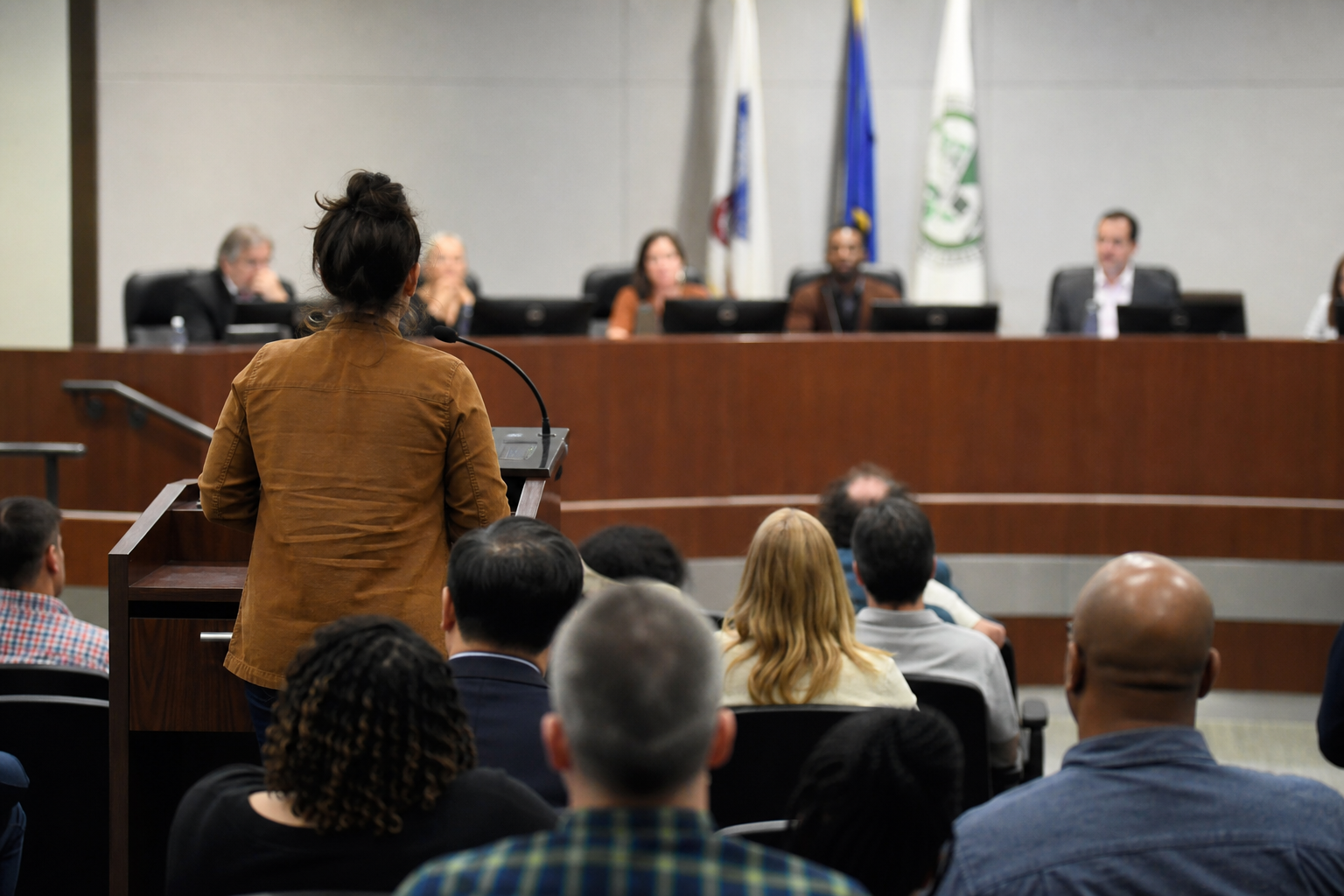
EFF published a tactical guide in February 2026: "Effecting Change: Get Flock Out of Our City." The playbook is simple and tested. Show up at council meetings with the maps. Bring the ICE data-sharing reporting. Bring the Bell v. Norfolk ruling. Bring the audit logs. Demand a vote. Win the vote. If the council refuses, run candidates in the next cycle who will.
The Orgs That Do the Work
If you cannot do the organizing yourself, fund the people who can.

- Electronic Frontier Foundation (eff.org) — leads ALPR litigation (SIREN v. San Jose is EFF’s case), runs the Atlas of Surveillance, publishes the Surveillance Self-Defense guide at ssd.eff.org.
- ACLU (national + state affiliates) — Schmidt v. Norfolk, "Drones for Intimidation" reporting, state-level legislation advocacy.
- EPIC (epic.org) — filed amicus briefs in Schmidt v. Norfolk and other ALPR cases.
- Institute for Justice (ij.org) — federal lawsuit against San Jose’s ALPR program on Fourth Amendment grounds.
- Fight for the Future (fightforthefuture.org) — led the campaign that forced Amazon Ring to cancel its Flock partnership in February 2026.
- MuckRock (muckrock.com) — FOIA infrastructure for the public.
- DeFlock (deflock.org) — the map.
- Access Now (accessnow.org/help) — 24/7 digital security helpline for activists and journalists.
Surveillance Self-Defense Guides (Vetted)
These are the canonical resources. Use them.

- EFF Surveillance Self-Defense — ssd.eff.org. Updated continuously. The "Attending a Protest" module was revised November 12, 2024.
- EFF Tool Guides — ssd.eff.org/module-categories/tool-guides
- ACLU-DC: How to Defend Against Police Surveillance at Protests — acludc.org
- AFSC Digital Security Guidelines for Protests (November 2025) — afsc.org
- Access Now Digital Security Helpline (24/7, multilingual, free) — accessnow.org/help
- Infosec 101 for Activists (updated April 22, 2026) — infosecforactivists.org
- Pratt Institute Informed Protest: Surveillance and Digital Privacy (March 2026) — libguides.pratt.edu
Critical Caveats and Honest Risks
This is civil disobedience, not legal advice.

- Evasion tools carry real legal consequences. Plate-cover laws vary by state. Anti-mask laws vary by state. Recording laws vary by state. Know yours.
- Many of the countermeasures above are illegal in some states. Verification per state is required before relying on them.
- Active drone jamming is a federal crime with serious penalties, full stop.
- Physical direct action against surveillance cameras is property destruction and a separate crime. It is civil disobedience in the Thoreau tradition. It carries real prison time. Jeffrey Sovern is facing 13 felony counts.
- Mass surveillance’s constitutionality is an open question the courts have not resolved. Living as though the Constitution already protects you is a bet on the future of Fourth Amendment jurisprudence. Make that bet with your eyes open.
Copy/Paste This
Three sentences for sharing:
Mass surveillance in America is no longer hypothetical. It is a $7.5 billion industry with 90,000 cameras and 1,500+ police drone programs, and the courts have not yet decided whether any of it is constitutional. This is the field manual for seeing it, evading it, and dismantling it: https://thethriftydev.com/blog/flock-cameras-drones-resistance-field-manual/
X / Twitter:
1984 was not supposed to be an instruction manual.
>
90,000 Flock cameras. 20 billion plate scans a month. 1,500+ police drone programs. A $7.5B industry tracking Americans while the courts decide if it’s constitutional.
>
Field manual for resistance: https://thethriftydev.com/blog/flock-cameras-drones-resistance-field-manual/
Congressional email subject: Support Fourth Amendment protections against ALPR and drone surveillance
Congressional email body:
I am writing to urge you to support legislation limiting warrantless ALPR (automated license plate reader) and drone surveillance of Americans. Companies like Flock Safety operate approximately 90,000 cameras across 49 states, performing an estimated 20 billion vehicle scans per month, with audit logs documenting thousands of immigration-related searches by local police on behalf of federal agencies. The courts have not yet ruled on whether this pervasive surveillance network complies with the Fourth Amendment under Carpenter v. United States (2018). I urge you to:
>
1. Support federal legislation requiring a warrant for ALPR and drone surveillance data access. 2. Prohibit federal data sharing with state and local agencies that conduct warrantless ALPR surveillance. 3. Prohibit the use of federal funds for the procurement of surveillance technologies that do not include strict data retention limits and audit logging requirements. 4. Support the rights of state and local governments to restrict or ban ALPR and drone surveillance within their jurisdictions.
>
The Fourth Amendment is not a technicality. Please treat mass surveillance of Americans as the constitutional issue it is.
Sources
Flock Safety / ALPR Industry:
- Wikipedia: Flock Safety
- CNBC Disruptor 50, June 2025
- Reuters: Flock $275M funding round, March 2025
- Flock Safety Evidence Policy, January 2026
- Flock Safety: Does Flock Share Data With ICE?, January 2026
Civil Liberties Reporting:
- ACLU-MA: Flock nationwide access, October 2025
- ACLU: Flock Roundup, August 2025
- ACLU: Police Audit Logs Don’t Work, October 2025
- EFF: 2025 Investigations Review, December 30, 2025
- EFF: License Plate Surveillance Logs Reveal Racist Policing Against Romani People, November 2025
- EFF: Get the Flock Out of Our City, February 2026
- EFF: Protester Surveillance via Flock, November 2025
ICE / Federal Data Sharing:
- 404 Media: ICE Taps Into Nationwide AI-Enabled Camera Network, May 2025
- The 74 / The Guardian: ICE Taps Into School Security Cameras, February 2026
- UWCHR: Leaving the Door Wide Open, October 2025
- NPR: Cities Ditching Flock, February 2026
Lawsuits and Case Law:
- ACLU: Schmidt v. Norfolk case page
- KTVU: Class action against Flock, February 2026
- Institute for Justice: San Jose License Plate Readers case
- EPIC: Vehicle Fingerprinting Amicus, February 2025
- EPIC: Schmidt v. Norfolk Amicus, April 2026
- EFF: Bell v. Norfolk amicus, September 2025
- Justia: United States v. Jones (2012)
- Justia: Riley v. California (2014)
- Supreme Court: Carpenter v. United States (2018) PDF
- Justia: Kyllo v. United States (2001)
Drone Surveillance:
- FAA Reauthorization Act of 2024 (Pub. L. 118-63)
- FAA Part 108 BVLOS NPRM, August 7, 2025 (Federal Register Doc. 2025-14992)
- Chula Vista PD UAS Drone Program
- NYPD UAS Impact and Use Policy, February 4, 2026
- ACLU: Drones for Intimidation, March 2026
- 18 U.S.C. § 1367 (satellite interference)
- 47 U.S.C. § 333 (radio interference)
- FCC Jammer Enforcement page
- DHS Counter-UAS authority (6 USC § 124n)
- DoD Counter-UAS authority (10 USC § 130i)
Countermeasures and Direct Action:
- DeFlock ALPR map
- EFF Atlas of Surveillance
- ALPR Watch companion app
- EFF: Anti-surveillance mapmaker Will Freeman refuses Flock C&D, February 2025
- ICNL: Anti-Mask Laws in the United States, September 2025
- Suffolk News-Herald: Suffolk VA arrest, October 2025
- OPB: Eugene/Springfield end Flock contracts, December 2025
- Cambridge MA: Flock contract termination, December 2025
- Gizmodo: Flock Cameras Have A People Love Smashing Them Problem, February 2026
- NCSL Transportation License Plate Policy
- Cap_able adversarial clothing
- Reflectacles anti-FR eyewear
- Mission Darkness Faraday bags
- SLNT Faraday bags
- GoDark Faraday bags
- SnoopSnitch on Google Play
- AIMSICD on GitHub
- TU Darmstadt AirGuard (Bluetooth tracker detection, not drones)
- AirSight AirGuard (commercial drone detection, not consumer)
- Dronetag Drone Scanner
- OpenSky Network
Surveillance Self-Defense:
- EFF Surveillance Self-Defense (SSD)
- ACLU-DC: Defend Against Police Surveillance at Protests
- Access Now Digital Security Helpline
Related Reading on TheThriftyDev
- The 2026 Sovereign Stack: Privacy Tools That Actually Resist
- Age Verification Creep Tracker: KOSA, App Store ID Laws, and More
- FCC Wants Your ID to Activate a Phone — Privacy Is Dead
- Delete Yourself From Data Brokers Without Paying DeleteMe
Last verified June 26, 2026. State laws and product availability change; verify before relying on any countermeasure. Civil disobedience carries real legal risk. The Constitution is not a magic shield — it is a promise the courts have not yet kept.
Read next
GLM-5.2 vs Local Qwen vs Opus: Which Should You Run in 2026?
9 min read·Updated Aug 16, 2026NostrXFacebookRedditTelegramSMSCopyOn this page▾The Three Models at a GlanceBenchmark Reality CheckThe Cost Story — Cloud vs LocalWhen to…
OpenClaw as an Agentic Framework: How I Use It, Why It Matters, and What to Consider Before You Set It Up
A practical builder guide to OpenClaw: setup, channels, memory, heartbeats, cron jobs, multi-agent workflows, sandboxing, and why an always-on agentic framework changes…
Age Verification Creep Tracker: KOSA, App Store ID Laws, and the Fight for Anonymous Speech
A living tracker for KOSA, app store age verification, state ID-check laws, and the policy pipeline pushing the internet toward identity checkpoints.