← Back
Communication Basics
Purpose: make sure your group can pass accurate messages fast, even when internet, power, or cell service fail.
Do This First (15 Minute Setup)
- Create a contact list with name, role, address zone, and two ways to reach each person.
- Assign one primary channel and two backups.
- Set check-in times: 08:00 and 20:00 daily.
- Pick one plain language emergency phrase. Example: "RED LEVEL at North Gate".
Tools and Materials
- Printed roster copies (minimum 3 copies in different homes)
- FRS/GMRS radios with spare batteries
- Notepad for message logs and incident number tracking
- Whistles for short range alerts (3 blasts = emergency)
- Chalk or marker board at common meeting point
- Optional: Meshtastic nodes for text relay without towers
Channel Selection by Distance
| Channel | Realistic Range | Best Use | Weakness |
|---|
| Face to face runner | Street to street | Critical verified messages | Slow, labor heavy |
| FRS handheld | 0.5 to 2 miles urban | Neighborhood teams | Can be noisy/congested |
| GMRS handheld/mobile | 1 to 5 miles typical | Wider local coverage | License requirement |
| CB mobile | 2 to 10 miles typical | Vehicle movement updates | High chatter |
| Ham with repeater | 10 to 50+ miles | Regional coordination | License and training needed |
| Meshtastic | 1 to 5 miles per node | Low power text relay | Needs node density |
Range changes with buildings, hills, weather, and antenna height.
Message Format That Prevents Confusion
Use the same 5-part structure every time:
- Who: sender call sign or name
- Where: exact location or zone code
- What: short event statement
- Need: what support is required
- When: timestamp in 24 hour format
Example: "Oak-2, Zone C bridge, road blocked by tree, need chainsaw team, 19:42".
Priority and Escalation Rules
| Priority | Definition | Response Target | Escalation Trigger |
|---|
| Routine | No immediate danger | Reply in 2 hours | No response after 2 hours |
| Urgent | Time sensitive but stable | Reply in 15 minutes | No response after 15 minutes |
| Emergency | Life or safety risk now | Reply in 2 minutes | No response after 2 minutes |
Common Mistakes and Fixes
- Mistake: long story messages. Fix: one event per transmission.
- Mistake: no timestamp. Fix: always append hh:mm.
- Mistake: everyone talking at once. Fix: net control assigns turns.
- Mistake: channel hopping in panic. Fix: switch only on pre-defined fallback sequence.
- Mistake: no written logs. Fix: every operator records inbound/outbound events.
Fallback Plan When Systems Fail
- If cell fails, move to radio primary channel for 10 minutes each hour.
- If radio fails, use runner protocol between fixed meeting points.
- If runner fails, place written notice at board locations at top of each hour.
- All members default to rally point at 18:00 if no contact for 12 hours.
Scenario Drills
Drill 1: Network Outage Night
- Disable phones for 30 minutes.
- Send 6 test messages across zones using radio only.
- Score accuracy and delivery time.
- Goal: 90 percent delivery under 5 minutes.
Drill 2: Misinformation Injection
- Inject one fake message into a training channel.
- Team must verify source identity using challenge phrase.
- Mark how fast fake message is contained.
- Goal: detect and isolate false signal in under 3 minutes.
Printable Communications Checklist
- [ ] Contact roster updated this week
- [ ] Primary + backup channels posted
- [ ] Spare power available for each device
- [ ] Message format card carried by operators
- [ ] Check-in schedule agreed by all members
- [ ] Escalation times posted and practiced
- [ ] Last drill date and score logged
Safety note: avoid broadcasting sensitive stock levels, locations of children, or exact medicine inventory over open radio channels.
QR REASSEMBLY: Scan content QRs in order to reconstruct this page offline.
Scan to open this page:
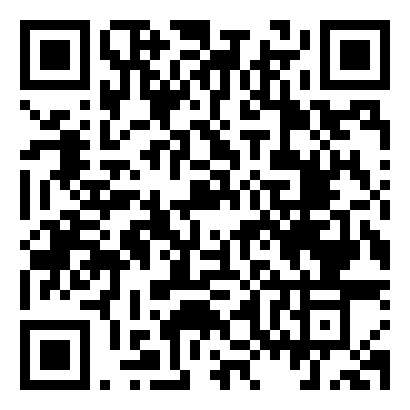
Offline Content QRs
Scan in order to reconstruct full page text offline.